


- On 30 September, 2025
- In Places to see
- Tags: st stephen's basilica budapest hours, st stephen's basilica budapest hungary, st stephen's basilica budapest opening hours, st stephen's basilica budapest price, st stephen's basilica cost, st stephen's basilica entry, st stephen's basilica price, st stephen's basilica tickets price, st stephen's church budapest
Why is St. Stephen’s Basilica one of the must-see attractions in Budapest? Because it concentrates everything travelers love about the Hungarian capital—faith, history, art, music, and skyline views—into a single, beautifully walkable stop.
This complete guide answers the questions visitors ask most: what the Basilica is, why it’s famous, how tickets and prices work, when to visit, whether it’s free, how many steps there are, and how to pair your visit with other Budapest highlights. Use the table of contents below to jump straight to the section that interests you.
What is St. Stephen’s Basilica in Budapest?
Before you step inside, it’s helpful to know how the Basilica came to be and what makes its design so unique. This section explores its construction, architectural style, and dedication to Hungary’s first king and saint.
When was the Basilica built and what is its architectural style?
Construction began in 1851 under József Hild, a leading figure of 19th-century Hungarian classicism. In 1868, after partial completion, the central dome collapsed, a calamity that brought Miklós Ybl—the country’s most celebrated architect of the era—onto the project. Ybl re-imagined the exterior masses and much of the interior décor in a refined Neo-Renaissance language while respecting Hild’s Neo-Classical bones. After Ybl’s death, József Kauser supervised the finishing works, and the church was consecrated in 1905.
The result is a dialogue between styles: a Corinthian portico and twin bell towers lead to an interior of marble revetments, gilded ribs and pendentives, and chapels articulated with mosaics and statuary. The Greek-cross plan keeps the liturgical focus tight—wherever you stand, you feel drawn toward the high altar and the luminous dome above.
Why is it dedicated to St. Stephen of Hungary?
The dedication honors King Stephen I (c. 975–1038), canonized in 1083 and venerated as the founder of Christian Hungary. Stephen consolidated power among Magyar tribal leaders, fostered conversion, organized dioceses and abbeys, and embedded Christian law into governance—transforming a confederation into a stable European kingdom. The Basilica safeguards his most famous relic, the mummified right hand known as the Holy Right (Szent Jobb), displayed in the Chapel of the Holy Right. For many Hungarians, the shrine is both a place of prayer and a tangible link to the country’s origins.
Quick facts
| Item | Details |
|---|---|
| Official name | Szent István-bazilika (St. Stephen’s Basilica) |
| Location | Szent István tér 1, District V (Pest city center) |
| Dome height | 96 m (equal by law to the Parliament dome) |
| Architects | József Hild (original), Miklós Ybl (redesign), József Kauser (completion) |
| Plan & style | Greek-cross plan; Neo-Classical base with Neo-Renaissance redesign |
| Panorama access | 364 steps or elevator to the terrace |
Who was St. Stephen of Hungary?
To appreciate the Basilica fully, you need to know the man it honors. Here we look at the life of King Stephen I, his role in Hungarian history, and why he is venerated as the patron saint of the nation.
What role did St. Stephen play in Hungarian history?
Crowned around the year 1000 with a diadem sent by Pope Sylvester II, Stephen guided Hungary from the margins of Latin Christendom to full membership in the European family of kingdoms. He quelled pagan uprisings, incentivized settlement and agriculture, and built an administrative network based on counties (vármegye) overseen by royal officials. He endowed monasteries and cathedral chapters that became engines of education, law, and culture. His legal codes tied religious observance to civic order—Sunday rest, tithes, and penalties for sacrilege—creating a fabric where faith and public life were interwoven.
Why is he considered the patron saint of Hungary?
Stephen’s sanctity rests on both piety and policy. As a monarch he was a pragmatic state-builder; as a Christian he protected the weak and promoted charity, founding hospices and supporting the Church’s mission. Canonized in 1083, he has been invoked for a millennium as the spiritual father of the nation. His feast on August 20 anchors Hungary’s civic calendar with processions, masses, and fireworks, and his relics remain objects of national devotion.
Is St. Stephen’s Basilica in Budapest Catholic?
The Basilica isn’t just an architectural gem—it’s a functioning place of worship. This part explains its role in the Catholic Church and why the Holy Right Hand relic is so important to Hungarians.
What role does it play in the Catholic Church in Hungary?
Yes. St. Stephen’s is a working Catholic church and the co-cathedral of the Archdiocese of Esztergom–Budapest. Daily masses, confessions, weddings, confirmations, and state-attended liturgies take place throughout the year. Because it is a house of worship, sightseeing pauses during major services. Visitors who wish to attend mass may enter free via the appropriate doors; those coming for sightseeing should purchase tickets and observe dress and photography rules.
What is the “Holy Right Hand” relic and why is it important?
The Holy Right (Szent Jobb) is the mummified right hand of King Stephen I, preserved in a gilded baroque reliquary. It is Hungary’s most revered relic and a centerpiece of national identity. Each 20 August, the reliquary is carried in solemn procession from the Basilica through the city center, uniting religious devotion with civic celebration and drawing thousands of pilgrims and visitors.
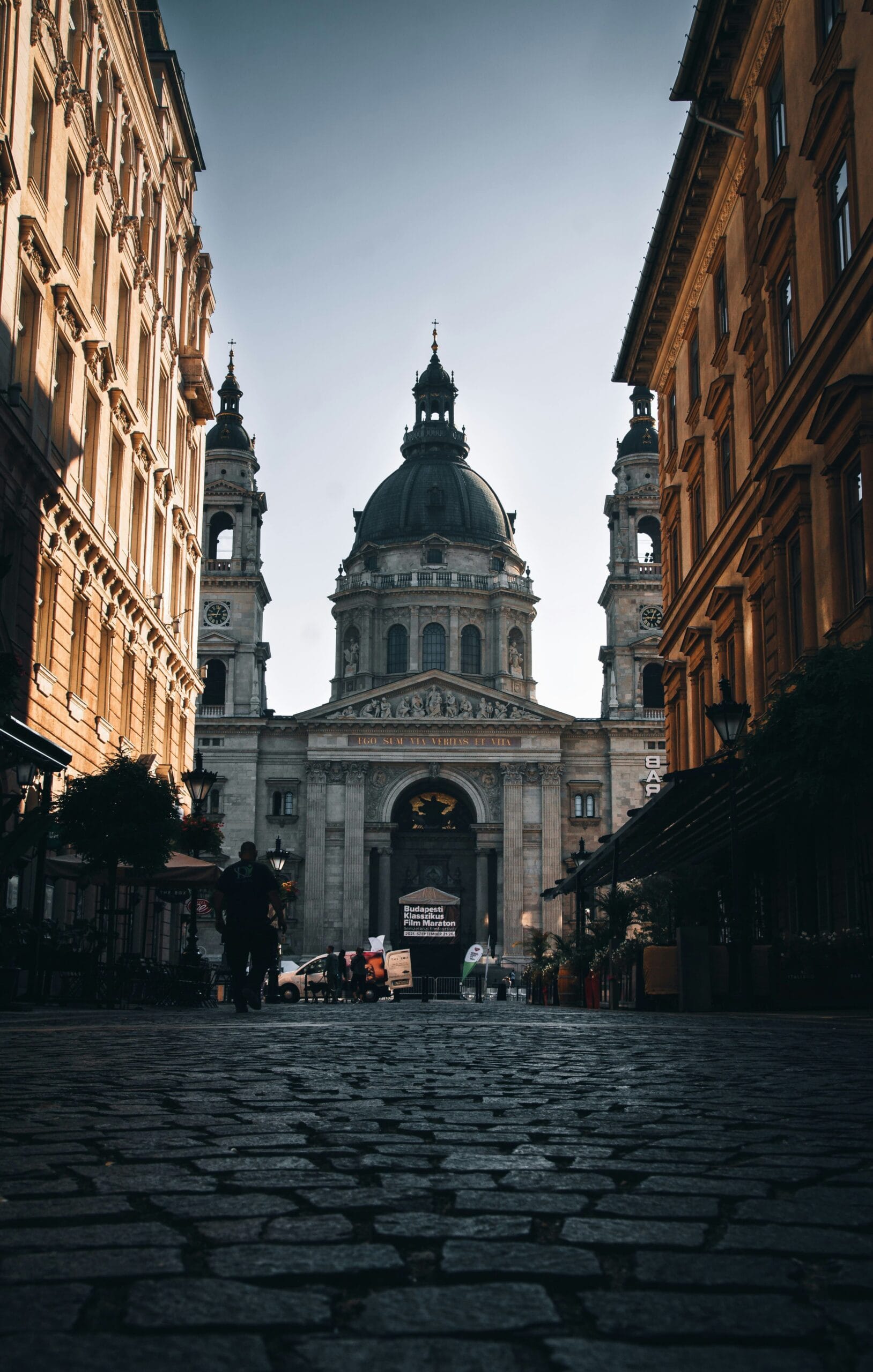
Why is St. Stephen’s Basilica Famous?
Beyond religion, the Basilica is one of Budapest’s most photographed landmarks. Here you’ll learn what makes its architecture unique, why the dome terrace is unmissable, and why its concerts are world-renowned.
Why is the Basilica considered an architectural masterpiece?
The Basilica’s beauty lies in proportion and craft. Outside, a wide staircase lifts you to a deep portico with fluted Corinthian columns; above, twin bell towers frame a richly modeled pediment and the drum of the dome. Inside, light plays over colored marbles (rosso, verde, beige), gilded coffers and archivolts, and mosaics that depict saints, kings, and the Virgin crowned as Queen of Hungary. The effect is ceremonial yet welcoming—designed to lift the heart as well as the eye. The 96-meter dome is not just a skyline feature; it is a constitutional symbol, matching the Parliament’s height to express equilibrium between altar and assembly.
What makes the dome and panoramic terrace so special?
The Panorama Terrace girdles the base of the dome, offering an open-air, 360-degree view over the Danube, the Parliament’s neo-Gothic spires, Buda Castle’s terraces, Gellért Hill, and the rooftops and boulevards of Pest. You can reach it by climbing 364 steps—steep and atmospheric, with occasional passing bays—or by a modern elevator. Families, photographers, and travelers with limited mobility appreciate the lift; climbers enjoy the sense of ascent and the rewarding reveal as you step outside to the skyline. Sunset and the following blue hour are spectacular.
Why is the Basilica also known for its concerts and organ music?
Few churches in Central Europe offer such a reliable calendar of organ and chamber concerts. Programs often pair solo organ with trumpet or soprano, or present string ensembles performing Bach, Mozart, Vivaldi, and Liszt. The Greek-cross plan—with its short vistas and lofty dome—creates a resonant yet articulate acoustic, so contrapuntal lines remain clear while chords bloom. Many visitors time their sightseeing to end with an evening concert, turning a day of architecture and history into a complete cultural experience.
Is St. Stephen’s Basilica Free to Enter?
Many travelers wonder if they can simply walk inside. In this section, we explain the entry rules, when it’s free, and when you need to buy a ticket.
Do you have to pay to enter St. Stephen’s Basilica?
Attending religious services is free. For sightseeing—nave and side chapels, Treasury, and Panorama Terrace—the Basilica operates a paid ticketing system that funds maintenance and manages visitor numbers. Think of your ticket as a contribution to the preservation of Hungary’s sacred heritage.
What are the rules for donations or ticketed entry?
Visitors wishing to explore the main church area, the Panorama Terrace, and the Treasury must purchase tickets. Prices vary depending on the areas included, with combined tickets offering the best value. For those attending services, no ticket is needed, but respectful behavior and appropriate dress are required. Photography is generally allowed without flash, though tripods are not permitted. For travelers, this means that while the Basilica is not entirely free, the ticket cost ensures access to its architectural wonders and panoramic views while contributing to the preservation of one of Hungary’s most iconic landmarks.
How Much Does It Cost to Enter St. Stephen’s Basilica?
Ticket prices vary depending on what you want to see. This section gives you an overview of costs for the main church, Treasury, Panorama Terrace, and combined tickets.
What is the ticket price for the Basilica?
Ticket policies evolve, and seasonal changes are possible. As a planning guide, adult sightseeing entry for the main church typically falls within a single-digit euro price, with reduced rates for students and seniors. Always check the current price list before you go.
How much are the panoramic terrace and treasury tickets?
The Panorama Terrace and the Treasury are often priced as add-ons or bundled within a combined ticket. If you enjoy viewpoints and sacred art, the combo is excellent value because the terrace provides one of Budapest’s finest vistas while the Treasury contextualizes the Basilica’s liturgical role.
Is there a combined ticket option and what does it include?
Combined tickets typically include the nave/chapels, the Treasury (reliquaries, vestments, liturgical silver), and the Panorama Terrace. Guided options may layer in fast-track entry and expert commentary that helps you read the architecture and iconography as you move from nave to dome.
| Area / Option | What it covers | Price |
|---|---|---|
| Basilica Interior (sightseeing) | Nave and chapels outside mass times | ≈ 6 EUR |
| Panorama Terrace and Treasury | Dome-base terrace; reliquaries | ≈ 12 EUR |
| Combined Ticket | Interior + Terrace + Treasury | ≈ 16 EUR |
| Concert Tickets | Organ/chamber programs (separate) | ≈ 25–60 EUR |
Do You Need Tickets for St. Stephen’s Basilica?
Not sure where or how to buy tickets? Here you’ll find everything about on-site counters, online booking, and the difference between sightseeing and concert tickets.
Where can you buy tickets for the Basilica?
Tickets are sold at on-site counters on Szent István tér and online. In high season (May–September) and around Advent–Christmas, queues can form at the counters; booking online secures a time slot and keeps your day on schedule.
Can you buy St. Stephen’s Basilica tickets online in advance?
Yes. Buying ahead via the official site or trusted partners is strongly recommended for weekends and evenings. If you’re booking a guided tour, confirm whether tickets are included and where your meeting point is (some tours gather outside on the square).
Do tickets also cover concerts or only entry?
Concert tickets are separate from sightseeing. Seating is often zoned by price, with premium pews closer to the performers. If you plan both sightseeing and a concert on the same day, allow a buffer between terrace time and the performance to return equipment, freshen up, and be seated calmly.
Are There Concerts in St. Stephen’s Basilica?
The Basilica doubles as one of Budapest’s best concert venues. This part explains the types of concerts you can expect, why they are so special, and how to buy tickets.
What types of concerts are held at the Basilica?
The calendar features weekly organ recitals, chamber programs for strings and brass, sacred vocal evenings, and seasonal specials (Advent, Eastertide). Programs typically run 60–90 minutes—long enough to feel substantial but short enough to pair with dinner or a nighttime Danube stroll.
Why are organ and classical music concerts here so popular?
Three ingredients explain the popularity: repertoire, instrument, and space. The repertoire presents familiar masterpieces alongside works by Hungarian composers; the instrument—a grand, meticulously voiced organ—has the power and color to fill the nave; and the space gives sound time to bloom without becoming muddy. The result is an enveloping, uplifting experience even for casual classical listeners.
How can you buy concert tickets?
Purchase online via reputable organizers (for example, organconcert.hu or budapestconcert.com) or at the Basilica booking desks. Popular weekends and premium seats sell out—reserve early. If you’re flexible, weeknight concerts outside peak season can be easier to book at short notice.
Is It Worth Visiting St. Stephen’s Basilica?
Short on time or building your itinerary? Here we weigh up why the Basilica deserves a spot on every Budapest trip and how it compares to other landmarks.
Why should tourists include the Basilica in their itinerary?
Because it condenses multiple Budapest experiences into one: sacred art, an origin story, a skyline terrace, and live music—all in a central location surrounded by cafés and pedestrian streets. It’s a perfect anchor for your first afternoon in the city.
How does it compare to other Budapest landmarks?
While Budapest’s Parliament and Buda Castle showcase political and royal grandeur, the Basilica offers a different perspective: a fusion of national identity and spiritual devotion. Its dome rivals the Parliament in height, symbolizing equality between church and state, while its location on Szent István tér places it at the heart of the city’s cultural life.
Is it a good option if you only have a short stay?
Yes. In 60–90 minutes you can see the interior highlights and ascend to the terrace; with a bit more time, a concert turns your visit into a signature memory. The square connects easily to the Danube Promenade, Andrássy Avenue, and the Jewish Quarter, so you can keep exploring without transport.
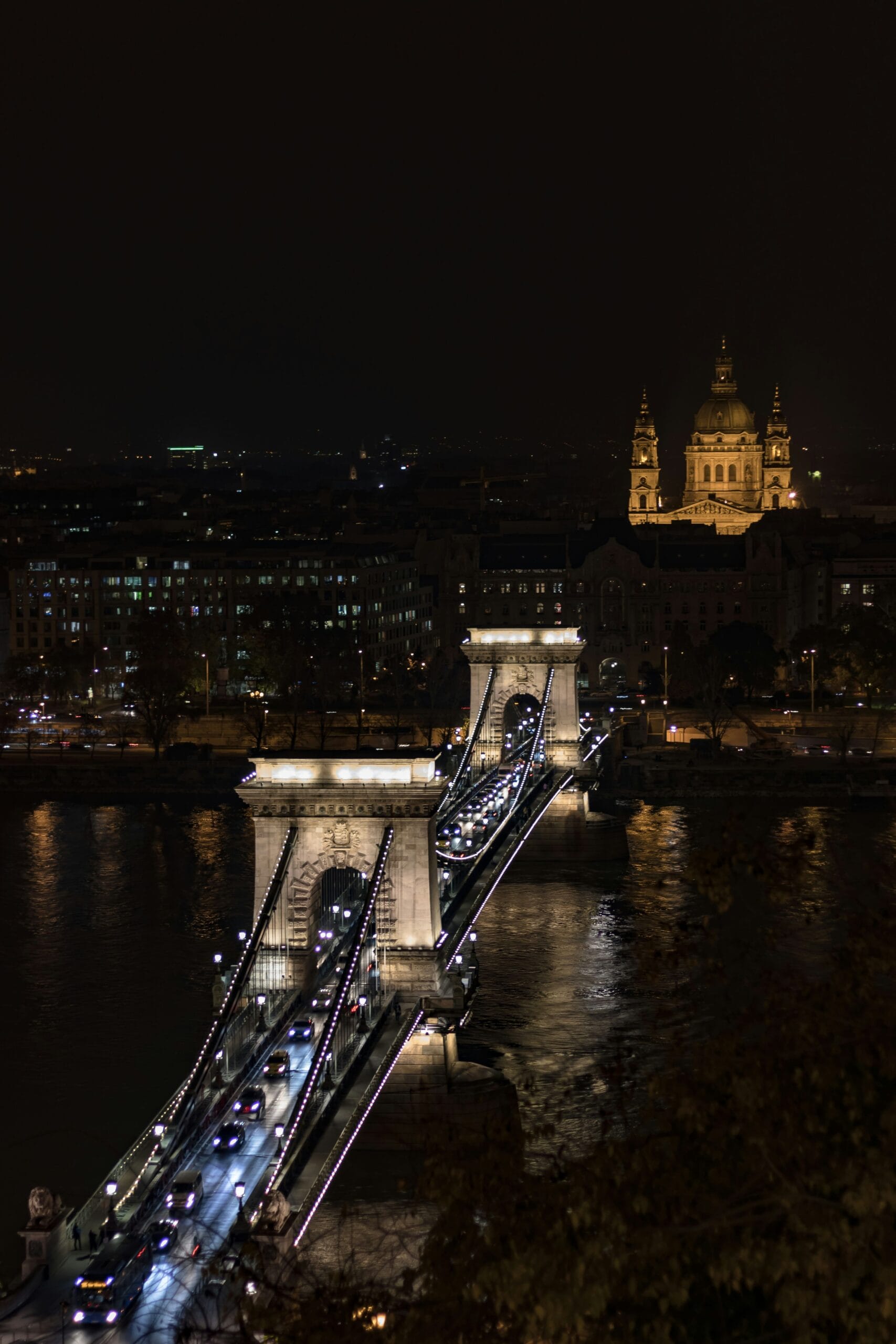
How Many Steps Does St. Stephen’s Basilica Have?
Climbing the dome is a highlight for many visitors. This section explains how many steps you’ll face, and whether there’s an elevator alternative.
How many steps do you need to climb to reach the dome?
The staircase counts 364 steps. It’s well-lit and secure but narrow in sections. If you’re sensitive to heights or tight spaces, take your time and use the alcoves to pause. Children enjoy the sense of adventure—hold hands and keep to the right to let others pass.
Is there an elevator to the panoramic terrace?
Yes. The elevator offers step-free access to the terrace, making the viewpoint feasible for families with strollers and visitors with reduced mobility. At busy times there may be a short wait—another reason to book early slots or visit late afternoon.
What Are the Opening Hours of St. Stephen’s Basilica?
Knowing the schedule saves time and stress. Here we cover daily visiting hours, mass schedules, and the difference between tourist and religious access.
What are the Basilica’s daily visiting hours?
St. Stephen’s Basilica is generally open Monday to Saturday from 9:00 to 17:15, with last entry tickets sold at 17:15. On Sundays and public holidays, the Basilica opens later, from 12:30 to 17:15, due to morning masses. The Panorama Terrace and Treasury usually follow slightly longer hours, from 9:00 to 19:00, with the last tickets sold at 18:30. Always confirm current times on the official page.
Are there different hours for mass and tourist visits?
Yes. Major Sunday masses, weddings, and feast-day ceremonies limit or suspend sightseeing. If you intend to pray or attend mass, arrive a little early; if you’re sightseeing, plan around service times for quieter interiors and shorter lines.
What’s the Best Time to Visit St. Stephen’s Basilica?
Crowds, light, and atmosphere all matter when planning your visit. This section shows you when it’s quietest, when to go for the best views, and the ideal time for concerts.
When is the Basilica least crowded?
The calmest windows are shortly after opening and again after 16:00. Midday brings tour groups and day-trippers, especially from May to September and during the Advent market season in late November–December.
Is sunset the best moment for panoramic views?
Sunset and the following blue hour are unbeatable. The Parliament, Chain Bridge, and Buda Castle light up in layers, and the Danube reflects the city’s golds and ambers. Photographers should budget time to stay through twilight as lights come on.
When is the best time to attend concerts?
**Evenings—often around 19:30 or 20:00—**fit naturally after sightseeing or dinner. Arrive 15–20 minutes early for unhurried seating and a few quiet moments to take in the interior before the music begins.
At-a-glance timing tips
| Goal | When to go | Practical tip |
|---|---|---|
| Quiet interiors | Opening hour; late afternoon | Pre-book tickets; avoid midday coaches |
| Top terrace photos | Golden hour & blue hour | Bring a light layer; wind can pick up |
| Concert experience | Evening (19:30–20:00) | Book in advance; plan dinner nearby |
| Cooler temperatures | Autumn mornings; winter days | Dress modestly year-round |
What is St. Stephen’s Day in Budapest?
The Basilica plays a central role in Hungary’s national day. Here’s what August 20 means, how it’s celebrated, and what special events take place around the Basilica.
What is celebrated on August 20 in Hungary?
St. Stephen’s Day (20 August) commemorates the state’s founding and its first Christian king. Across Budapest you’ll find open-air masses, heritage shows, street-food fairs, and family activities. The mood blends reverence and festivity—a living civic ritual rather than a mere historical pageant.
How does the Basilica participate in the celebrations?
The Basilica anchors the sacred component of the day with the Holy Right Hand Procession, carrying the reliquary through the surrounding streets. Expect dense crowds around Szent István tér and intermittent access restrictions. If you wish to watch, arrive early and stake out a respectful vantage point.
What special events take place on St. Stephen’s Day?
Beyond the procession, cultural stages pop up across the center, and the evening often culminates in one of Europe’s most elaborate fireworks displays over the Danube. Public transport runs extended services but stations near the river may close temporarily for safety—follow local advisories.
Practical Visitor Information
Visiting St. Stephen’s Basilica is straightforward thanks to its central location, but a few practical details will make your experience smoother. Here’s what you need to know about getting there, accessibility, and nearby attractions.
Where is St. Stephen’s Basilica located in Budapest?
The Basilica stands in District V on Szent István tér, a handsome square ringed by cafés and terraces. It’s a short walk from Deák Ferenc tér (the city’s main metro interchange), the Danube Promenade, Liberty Square, and the Parliament quarter.
How do you get to Szent István tér?
Metro: Bajcsy-Zsilinszky út (M1) and Arany János utca (M3) are closest.
Tram: Line 2 along the Danube provides scenic access; alight near Széchenyi István tér and walk 8–10 minutes.
Bus/Taxi: Plenty in the center; ride-hailing works reliably.
Driving: Possible, but parking is scarce and metered—public transport is easier.
Is the Basilica accessible for people with reduced mobility?
Yes. Ramps and an elevator facilitate access to the nave and terrace. Some side aisles narrow near chapels; staff can advise on the easiest routes. Accessible restrooms are available within visitor areas. For concerts, request seats with minimal steps when booking.
What attractions are near the Basilica?
Within 15 minutes on foot you can reach the Chain Bridge, the Parliament Building, Liberty Square, the Danube Promenade, the Opera House on Andrássy Avenue, and the cafés of the Jewish Quarter. The square itself is lively—perfect for a coffee before or after your visit.
Visitor Etiquette & Smart Tips
The Basilica is both a tourist attraction and a place of worship. This section lists practical tips to ensure your visit is respectful and enjoyable.
| Tip | Why it matters |
|---|---|
| Dress code | Covered shoulders/knees honor the sacred space and ease entry |
| Keep it quiet | Respect those praying; save phone calls for the square |
| Photo policy | No flash; no tripods; be discreet during services |
| Plan around masses | Feast-day liturgies restrict sightseeing access |
| Buy online in season | Skip queues; lock in terrace & concert times |
| Travel light | Large bags may be restricted; security checks possible |
| Mind the steps | Use the elevator if steep staircases aren’t for you |
Suggested 90-Minute Basilica Plan
Pressed for time? Here’s a sample plan to help you see the highlights of the Basilica in just an hour and a half, without feeling rushed.
| Minute | Activity |
|---|---|
| 0–10 | Arrive on Szent István tér; admire façade; purchase/collect tickets |
| 10–35 | Explore nave and side chapels; visit Chapel of the Holy Right |
| 35–45 | Optional: brief stop at the Treasury |
| 45–60 | Ascend via stairs or elevator to Panorama Terrace |
| 60–80 | Enjoy 360° views; photography at golden hour if timing allows |
| 80–90 | Descend; coffee on the square or walk toward the Danube |
Why is St. Stephen’s Basilica a must-visit in Budapest?
St. Stephen’s Basilica distills Budapest into one enriching stop: a sacred interior where art and nationhood meet, a skyline terrace with unforgettable views, and evening music that lets the building sing. You can experience history, faith, and culture in a couple of unhurried hours—and still be steps from the city’s best cafés and promenades.
To connect the dots across the city’s story, join the city-center Best of Budapest Free Walking Tour by GoZeppelin.
It links the Basilica with Parliament, Liberty Square, the Danube, and other essentials, guided by licensed experts who bring the capital’s complex past to life.
Book your preferred time, lace up your walking shoes, and let Budapest surprise you—starting with its most emblematic church.