


The Budapest Opera House, officially known as the Hungarian State Opera House, is one of the most important cultural landmarks in Hungary and a must-see stop for many visitors to Budapest. Located on Andrássy Avenue, a UNESCO-listed boulevard, it combines history, architecture, and live performances in a single place that is easy to visit even if you are not an opera fan.
This guide is designed to help you plan your visit step by step. You will find clear information about where the Opera House is, how to get there, opening hours, ticket prices, guided tours, dress code, and practical tips. The goal is to answer the most common questions travelers ask before visiting, so you can decide what makes the most sense for your schedule and budget.
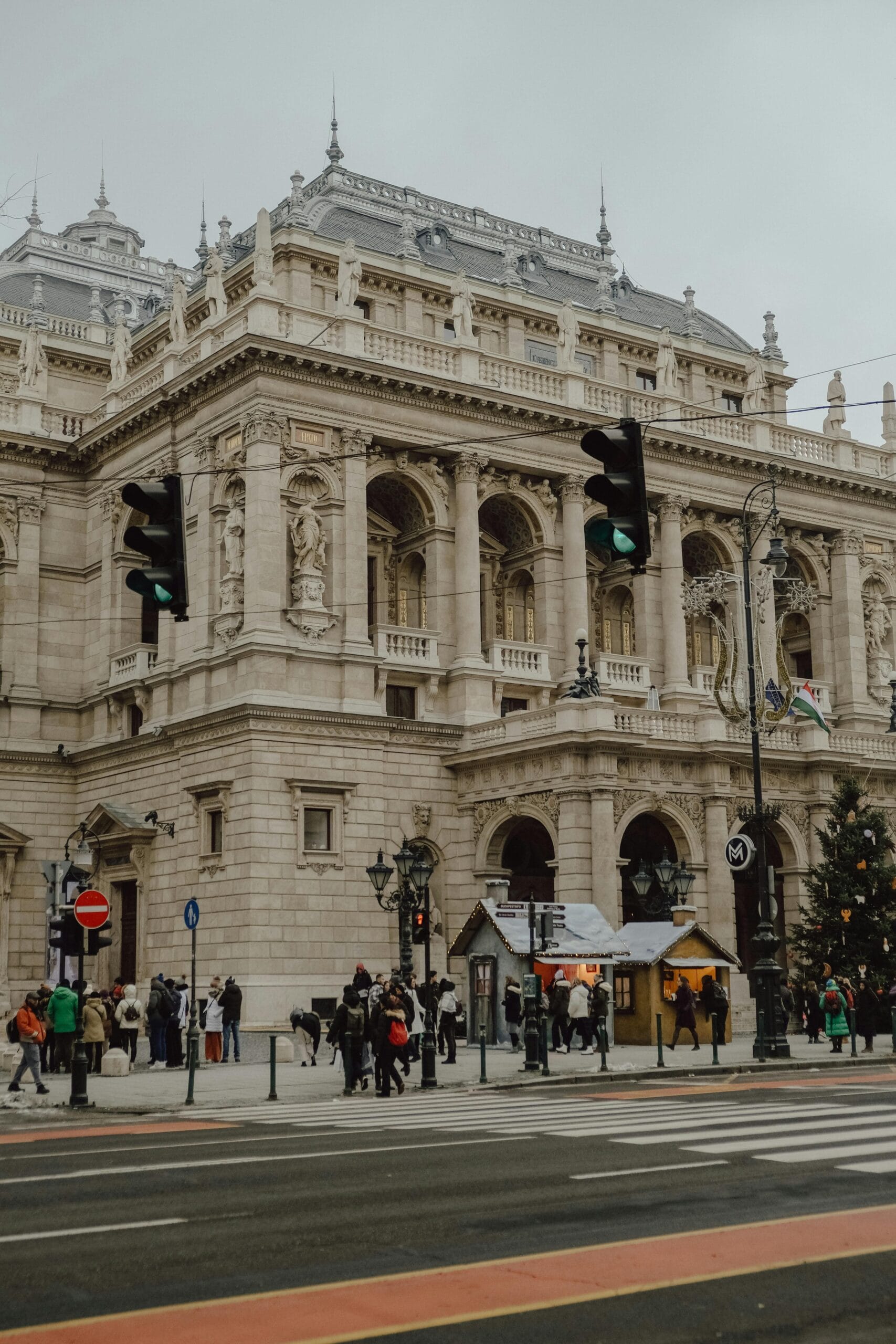
What is the Budapest Opera House?
The Budapest Opera House is Hungary’s main opera and ballet theatre and one of the most important historic buildings in the city.
The Hungarian State Opera House opened in 1884 and has been at the centre of Budapest’s cultural life ever since. It was built to give the Hungarian capital a world-class opera venue that could stand alongside those of Vienna and Paris. Today, it hosts opera, ballet, and classical music performances, while also welcoming visitors through guided tours.
For travelers, the Opera House is not just a place to see a show. It is also an architectural landmark that can be visited during the day, making it accessible even if you do not plan to attend a performance.
History of the Hungarian State Opera
The Opera House was built during a period when Budapest was growing fast and shaping its modern identity. After the Austro-Hungarian Compromise of 1867, the city invested heavily in culture and public buildings. The Opera House became a symbol of this ambition.
Construction began in 1875 and lasted almost ten years. The building was inaugurated on 27 September 1884 in the presence of Emperor Franz Joseph I. From the start, it played a key role in promoting Hungarian music and language, while also hosting major European works. Over the decades, famous composers and conductors, including Gustav Mahler, helped raise its international reputation.
Despite wars and political changes, the Opera House has remained active. After several restorations, the most recent major renovation was completed in 2022, bringing the building back to its original look while updating it for modern use.
Architecture and design of the Opera House
The Budapest Opera House was designed by architect Miklós Ybl, one of the most important Hungarian architects of the 19th century. The building follows a Neo-Renaissance style, with a richly decorated façade and an interior designed to impress both visually and acoustically.
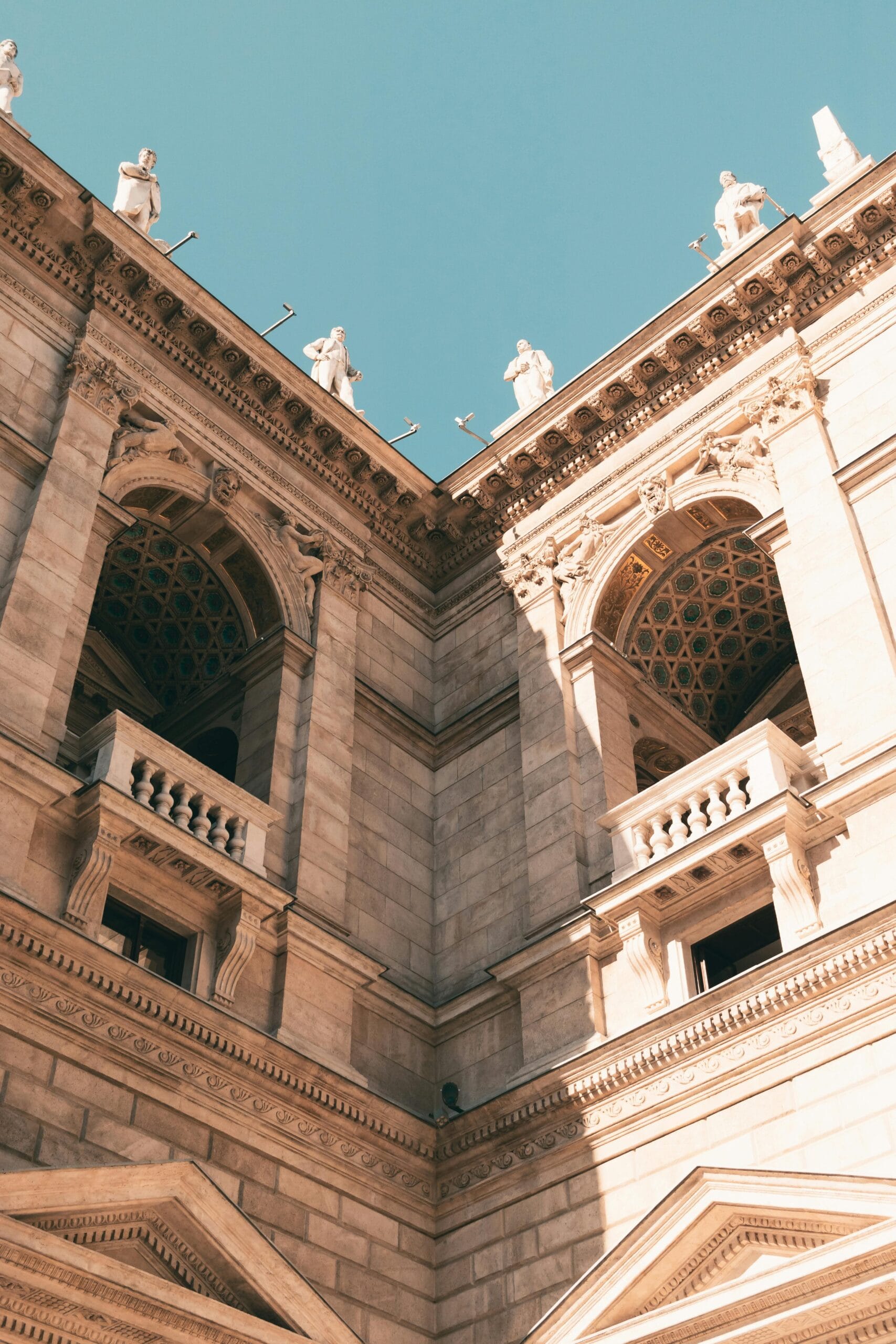
Outside, statues of famous composers line the upper façade, while statues of Ferenc Erkel and Franz Liszt frame the main entrance. Inside, visitors find marble staircases, gold details, and painted ceilings. The auditorium has a classic horseshoe shape, which helps create excellent natural acoustics without electronic amplification.
One of the highlights is the large ceiling fresco in the main hall, painted by Károly Lotz, and the central chandelier, which is still lowered by hand for maintenance. These details make the Opera House interesting not only for music lovers but also for visitors interested in art and architecture.
Where is the Budapest Opera House located?
The Opera House stands on Andrássy Avenue, a wide, elegant street that connects the inner city with Heroes’ Square. This area is easy to reach on foot and well connected by public transport, which makes visiting the Opera House simple even if you are in Budapest for a short stay.
The official address is Andrássy út 22, District VI (Terézváros). Many visitors pass by the building without realising that it is open to the public during the day, not only in the evening.
Where is the Budapest Opera House exactly?
The Opera House is located between Oktogon and Deák Ferenc tér, two major transport hubs. It sits directly on Andrássy Avenue, facing the street, so it is hard to miss thanks to its decorated façade and statues.
This location places the Opera House close to other popular sights. St. Stephen’s Basilica is about a five-minute walk away, and the Jewish Quarter can be reached in around ten minutes on foot. Because of this, the Opera House fits easily into a walking itinerary of central Budapest.
How to get to the Budapest Opera House
Getting to the Opera House is straightforward, even if you are visiting Budapest for the first time.
- Metro: The easiest way is metro line M1 (the Millennium Underground). Get off at Opera station, which is directly in front of the building.
- Walking: From Deák Ferenc tér, walk along Bajcsy-Zsilinszky Street and turn onto Andrássy Avenue. The walk takes about 10-12 minutes.
- Tram: Tram lines 4 and 6 stop at Oktogon. From there, it is a short walk along Andrássy Avenue toward the city centre.
Because of its central location, many visitors choose to combine the Opera House visit with nearby cafés, restaurants, or a walk along Andrássy Avenue.
How much do Budapest Opera House tickets cost and where can you buy them?
Ticket prices at the Budapest Opera House depend on whether you choose a guided tour or a performance, and on the seat category you select.
For most visitors, tickets fall into two clear groups: daytime guided tours and evening opera or ballet performances. Prices, rules, and booking options are different for each, so it’s useful to know what to expect before planning your visit.
How much do Budapest Opera House tickets cost?
For guided tours, prices are fixed and easy to plan around. Official tours last about one hour and include access to the main public areas of the building.
- Guided tour (foreign languages): around 10,500 HUF per person
- Guided tour (Hungarian): lower price
- Children under 3 years: free
Tours often end with a short live performance on the main staircase, which helps visitors hear the building’s natural acoustics.
For performances, prices vary more depending on the show, date, and seating area:
- Upper balconies and gallery: lower prices, good acoustics
- Dress circle and boxes: mid-range prices
- Stalls and central boxes: highest prices
As a general rule, opera and ballet tickets can range from budget-friendly options to premium seats, especially for popular productions or weekend evenings.
Current prices and seat availability are listed on the official programme page.
Where to buy Budapest Opera tickets online
The safest and most direct option is to buy tickets from the official Opera House website:
Here you can:
- Check the full programme
- See seating plans
- Buy tickets for performances and tours
Tickets can also be purchased in person at the official ticket office on Hajós Street, near the Opera House. Opening hours and details are available here:
https://www.opera.hu/en/contact/
Some visitors use third-party platforms, but prices may be higher and seat selection more limited. For performances, booking directly through the Opera House is usually the best option.
Best seats and tips for first-time visitors
If this is your first visit, you do not need the most expensive seats to enjoy the experience. The auditorium was designed for strong natural sound, so even upper levels offer good acoustics.
Useful tips:
- For budget travelers: upper balconies or gallery seating
- For a balanced experience: dress circle seats offer good views and comfort
- For special occasions: stalls or central boxes
Popular shows can sell out weeks in advance, especially during spring and autumn. If you are visiting during peak season, booking early is strongly recommended.
What shows and performances are on at the Budapest Opera House?
The Budapest Opera House offers opera, ballet, and classical music performances throughout most of the year, with a programme that changes regularly.
The Hungarian State Opera House runs a full season from autumn to late spring, with lighter programming during summer. Performances range from famous international works to Hungarian compositions, making it possible to find something interesting even if you are not an opera expert.
Opera and ballet at the Budapest Opera House
The programme includes both opera and ballet, performed by the resident orchestra, choir, and ballet company, often joined by guest artists. Many productions are staged in their original language, with subtitles displayed above the stage in Hungarian and English.
Visitors commonly find:
- Classic operas by composers such as Verdi, Mozart, Puccini, and Wagner
- Well-known ballets like Swan Lake and The Nutcracker
- Occasional contemporary productions and special concerts
Because the Opera House focuses on strong acoustics and traditional staging, performances are suitable even for first-time visitors who want a clear and immersive experience.
The full and updated programme is published on the official website.
Popular shows and seasonal highlights
The Opera House stages classic Italian operas, large-scale romantic works, and ballet productions performed by the Hungarian National Ballet. Most operas are sung in their original language, with surtitles in Hungarian and English, so it is easy to follow the story.
Among the many titles in the programme, some productions are especially relevant for visitors.
The Nutcracker (ballet)
- Running time: about 2 hours and 30 minutes, including one interval
The Nutcracker by Tchaikovsky is one of the most popular ballets in Budapest, especially during the Christmas season. It has been part of the Opera House tradition for decades and is often the first ballet many visitors ever see.
The current production, introduced in 2015, follows classical ballet traditions while using modern stage design. The choreography was created by Wayne Eagling in collaboration with ballet director Tamás Solymosi. It was designed specifically for the Hungarian National Ballet and focuses strongly on visual impact and dance quality.
Because it tells a fairy-tale story through music and movement, The Nutcracker is a very accessible choice for families and for visitors who do not speak Hungarian.
Aida (opera)
- Running time: about 3 hours and 35 minutes, including two intervals
- Language: Italian
- Surtitles: Hungarian, English, Italian
Aida is one of Giuseppe Verdi’s most famous operas and a frequent highlight of the Budapest Opera programme. The story follows the Ethiopian princess Aida, torn between loyalty to her homeland, her family, and her love for the Egyptian commander Radamès.
The opera deals with war, power, and personal sacrifice. Large choral scenes and dramatic music make it a strong visual and emotional experience, even for first-time opera visitors. Despite the historical setting, the themes are timeless and easy to relate to.
This is a good choice if you want to see a grand opera production with impressive music and staging.
Tosca (opera)
- Running time: about 3 hours, including two intervals
- Language: Italian
- Surtitles: Hungarian, English, Italian
Tosca by Giacomo Puccini is a dramatic opera built on intense emotions, sudden plot turns, and moral conflict. The story centres on the singer Tosca and the painter Mario, trapped in a system of abuse of power under a ruthless police chief.
In the Budapest Opera House production, the story is set in a dark period similar to Hungary in the 1950s, when fear, control, and repression were part of everyday life. This setting makes the opera feel close to local history without using direct political symbols.
The focus is on human courage, loyalty, and tragedy, which makes Tosca especially powerful, even for viewers who are new to opera.
Where to check the Opera House programme and schedule
The best way to plan ahead is to check the official programme online, where you can filter by date, genre, and venue. Each performance page includes:
- Start time and duration
- Cast information
- Seat availability and prices
You can also use the programme to decide whether a daytime guided tour or an evening performance fits better into your itinerary.
Are guided tours of the Budapest Opera House worth it?
Yes. A guided tour is the easiest way to see the interior of the Budapest Opera House, especially if you do not plan to attend an evening performance.
Guided tours allow visitors to enter the most impressive public spaces of the Opera House during the day, learn about its history and architecture, and understand why it is considered one of Europe’s great opera buildings. This option works well for travelers with limited time or for those who want a cultural experience without committing to a full opera night.
What is included in a Budapest Opera House guided tour?
A standard guided tour of the Opera House focuses on the main public areas of the building. During the visit, you will see:
- The grand staircase and main foyer
- The richly decorated auditorium
- Frescoes, chandeliers, and decorative details from the Austro-Hungarian period
- Architectural and historical highlights explained by an official guide
Backstage areas are not part of the visit, as the building is an active theatre with daily rehearsals and performances.
Guided tour with live performance by Go Zeppelin Tours
One popular option is the guided Opera House tour with live performance offered by Go Zeppelin Tours. This tour is designed for visitors who want both historical context and a short musical experience, without attending a full evening show.
The visit follows the official guided route inside the Opera House and ends with a short live opera performance by professional singers. This final moment gives visitors the chance to hear the Opera House’s famous acoustics in action, even if they have never been to an opera before.
The tour is conducted in English and lasts approximately 60 minutes, including the live performance. It is a good choice if you want a complete but compact experience and prefer a structured visit led by professional guides.
How long is the Budapest Opera House tour?
Most guided tours, including the Go Zeppelin option, last around one hour. This makes them easy to combine with other nearby attractions, such as St. Stephen’s Basilica or a walk along Andrássy Avenue.
Tours run several times per day, but places are limited, so booking in advance is recommended during busy travel periods.
Is the guided tour worth it if you don’t like opera?
For many visitors, the answer is yes. The guided tour focuses as much on architecture, history, and design as on music. Even travelers who are not opera fans often enjoy seeing the interior and learning how the building reflects Budapest’s cultural past.
If you are unsure about attending a full performance, a guided tour is a good way to experience the Opera House in a relaxed and accessible format.
What should you know before visiting the Budapest Opera House?
Before visiting the Budapest Opera House, it’s important to check opening hours, dress code rules, and accessibility, as these depend on whether you join a tour or attend a performance.
This section focuses on practical details that help you avoid surprises and plan your visit smoothly.
Budapest Opera House opening hours
Opening times vary depending on activities inside the building. The Opera House does not have fixed “museum-style” hours, as it functions as a working theatre.
The most reliable reference for updated hours is the official contact page.
Below is a general overview to help you plan:
| Área / Actividad | Horario habitual | Notas |
|---|---|---|
| Taquilla | 10:00–19:00 | En días con función, abierta hasta el final del primer intermedio |
| Visitas guiadas | Primeras horas de la tarde | Varios turnos al día, se recomienda reservar |
| Funciones de tarde | Normalmente entre 18:00 y 19:00 | El acceso se abre antes del inicio |
| Café y bares | Desde el mediodía | El acceso puede variar según el evento |
Because schedules can change due to rehearsals or special events, checking the official site shortly before your visit is always advised.
Best time to visit the Opera House
If you want to see the interior and take photos, a daytime guided tour is the best option. These tours are quieter and easier to fit into a sightseeing day.
If you want the full atmosphere, an evening performance offers a more immersive experience, with music, lighting, and audience rituals that bring the building to life.
Spring and autumn are usually the busiest periods. During summer, fewer performances take place, but guided tours still run regularly.
Dress code inside the Budapest Opera House
There is no strict written dress code, but expectations differ between tours and performances.
- Daytime guided tours: smart casual clothing is fine
- Evening performances: elegant attire is expected
Jeans and sneakers are usually accepted for tours, but for performances, visitors are encouraged to dress more formally out of respect for the venue and performers.
Large bags and backpacks are not allowed in the auditorium and must be left in the free cloakroom.
Accessibility and facilities
The Opera House has improved accessibility following its most recent renovation.
- Step-free access is available in key public areas
- Elevators and ramps assist movement inside the building
- Designated seating is available for visitors with reduced mobility
It’s important to note that guided tours involve stairs, which may limit access for some visitors. If you require assistance or have specific needs, contacting the Opera House in advance is recommended.
Is the Budapest Opera House worth visiting?
Yes. The Budapest Opera House is worth visiting even if you are not an opera fan, thanks to its architecture, history, and the different ways you can experience it.
For many travelers, the Opera House is one of the most impressive interiors in Budapest. You do not need deep knowledge of opera or ballet to enjoy the visit, as the building itself is the main attraction for many people.
Is the Budapest Opera House worth it for opera lovers?
If you enjoy opera or classical music, the answer is clearly yes. The Opera House is known for its natural acoustics and traditional staging, which allow performances to be heard clearly without amplification. Seeing an opera or ballet here offers a different experience compared to modern concert halls.
The programme includes both international classics and Hungarian works, so even repeat visitors can find something new. For opera lovers, attending a performance is the most complete way to experience the venue.
Is it worth visiting for first-time visitors and casual tourists?
Many visitors choose the Opera House even if they have never been to an opera before. A guided tour allows you to see the main spaces, learn about the building’s past, and understand its role in Budapest’s cultural life in about one hour.
If you are short on time or unsure about committing to a full evening performance, a daytime tour is often the best starting point. It gives you access to the highlights of the building and can be combined easily with other nearby sights.
For travelers who want a short musical moment without a long performance, tours that include a brief live recital offer a good balance between sightseeing and culture.
Whatever type of traveller you are, making the most of your time in Budapest starts with good planning. Visiting the Opera House is a great first step, but the city has many other landmarks that are easier to appreciate with the right background.
Go Zeppelin Tours helps visitors explore the Hungarian capital in a clear and relaxed way, combining history, culture, and practical insight. Alongside the Opera House experience, our Budapest guided tours cover the city’s main sights, lesser-known areas, and local stories, helping you understand Budapest beyond the main attractions.
This way, the Opera House becomes part of a broader and well-organised experience of the city, not just a single stop.