


Winter in Budapest has a special charm that makes the city feel warm even when the weather is cold. From December to February, the streets fill with lights, outdoor rinks open across the city, thermal baths release steam into the air, and a full calendar of concerts and seasonal events gives you plenty to do. Whether you visit for the Christmas atmosphere, quieter January days, or the cultural season in February, the city has something different to offer each month.
The season starts with festive markets and light shows, continues with New Year traditions, and ends with opera premieres, bath parties, and the last weeks of outdoor skating. If you want to explore winter Budapest in detail — from weather, to what to wear, to things to do — this guide covers everything you need to plan your trip.
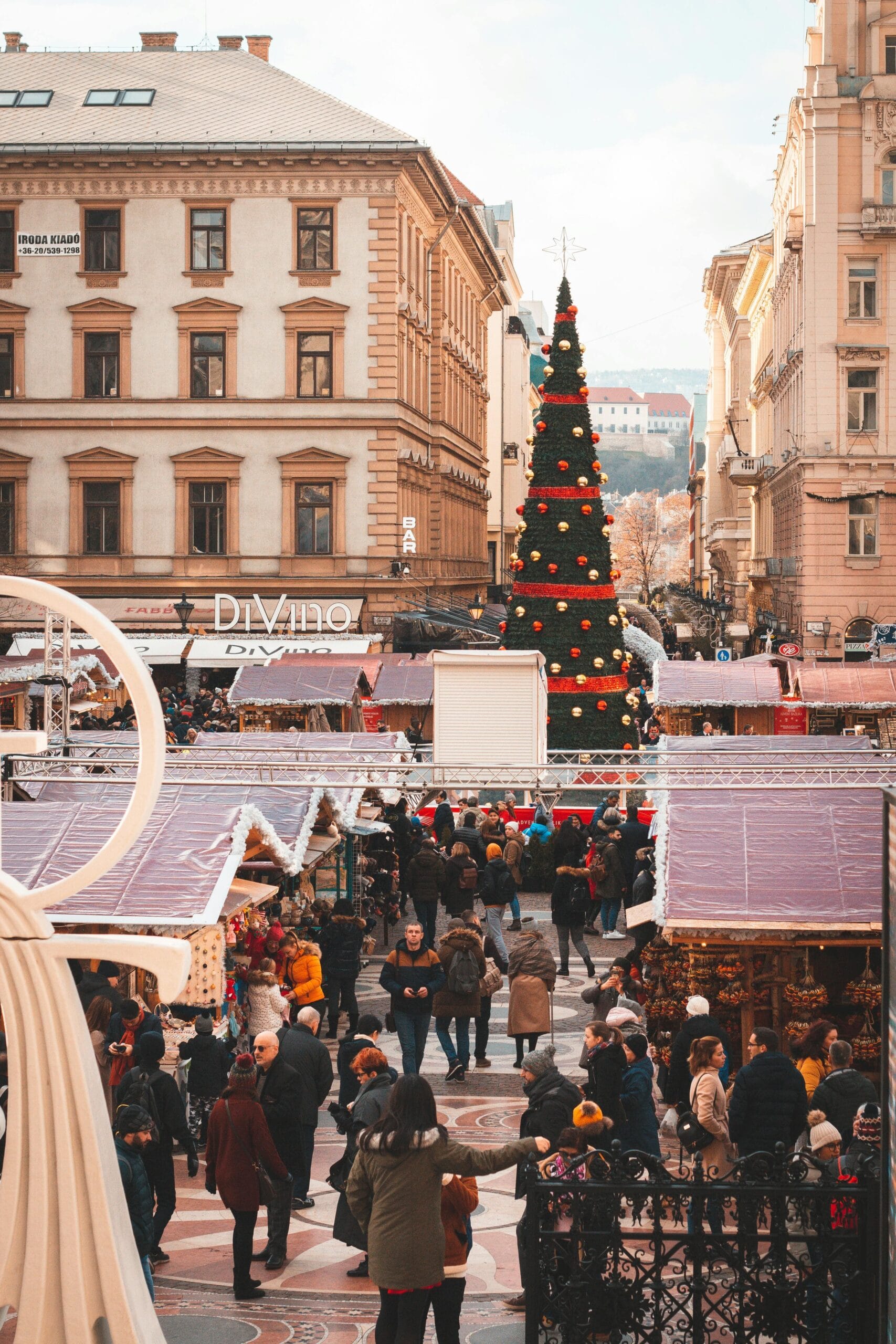
Budapest in December (2025)
Is Budapest worth visiting in December?
December is one of the nicest times to see Budapest. The whole city turns festive: lights hang across the main streets, mulled wine stalls appear in the squares, and the Christmas markets bring music and warm food into the cold evenings. The two main markets — Vörösmarty Square and St. Stephen’s Basilica — open from mid-November, and both stay busy until the end of the year. You can read more details on our Christmas Markets’ guide.
The season is also rich in cultural events. The Hungarian State Opera presents its winter program during these weeks, including Hungarian Christmas (6–18 December), La Bohème (13–27 December), Messiah – Mozart Version (21–22 December), and the always popular Nutcracker from 29 November until early January. Families enjoy Magic Grove in City Park from 6 December to 1 January, while Lumina Park on Margaret Island runs from 22 October with over 200 illuminated installations. All these events make December lively and easy to enjoy, even with cold weather.
Weather in Budapest in December
December brings the first true winter days. Temperatures usually sit around 3–4°C during the day and drop below zero at night. Snow can fall at any point, especially toward the end of the month, but it often melts within a day. Mornings can be grey or foggy, and daylight is short, with the sun setting around 4:00 PM.
The wind along the Danube adds a sharper chill, so the air often feels colder than the number you see on the thermometer. Still, the weather rarely stops visitors from walking around the city, and many indoor attractions — cafés, museums, baths — offer a warm break whenever needed.
What to Wear in December
December requires warm clothing, but comfort is easy to manage with layers. Most travellers wear a thermal top under a sweater and finish with a thick winter coat. A proper coat is essential, ideally one that covers the hips and can handle light rain or snow. Waterproof boots with good grip are helpful on icy cobblestones, and wool socks keep feet warm on long days outside.
Accessories make a big difference: a hat that covers the ears, a warm scarf, and gloves or mittens help you stay outside longer without feeling cold. For evenings at the opera or Christmas concerts, locals keep things simple — dark trousers with a wool coat, or a warm dress with tights and boots.
If you plan to visit the thermal baths, remember to pack swimwear and flip-flops. The baths feel wonderful in winter, especially when steam rises into the cold air.
Budapest in January (2026)
Is January worth visiting Budapest?
January is a calm month in Budapest and a good choice if you prefer quiet streets and lower prices. The festive crowds disappear after New Year’s Day, so museums, cafés, and historic sites feel more relaxed than in December. Accommodation also becomes more affordable, and many restaurants switch back to a local rhythm.
The cultural scene stays active. The year opens with the New Year’s Day Concert at St. Stephen’s Basilica on 1 January at 20:00, a highlight for classical music fans. The Hungarian State Opera continues its winter season with Stephen the King (running until 10 January) and Golden Age (1 January–15 February). The City Park Ice Rink runs at full capacity throughout the month, and if your visit falls on a snowy day, it becomes one of the most scenic places in the city.
January may not have the lights and markets of December, but it offers something different: slow sightseeing, cosy afternoons in warm cafés, and the chance to experience Budapest as locals do during winter.
Weather in Budapest in January
January is the coldest month of the year in Budapest. Daytime temperatures often stay around 1–2°C, while nights can fall to –3 or –4°C, with occasional mornings close to –10°C. Snow is more common in January than in December, although it usually comes in light, short intervals rather than heavy storms.
The sky is often cloudy, and days are short, but the air can feel clear and crisp after snowfall. Even so, the wind can be strong along wide avenues and the riverfront, so the real-feel temperature is often lower than the official numbers. Visitors should be prepared for icy sidewalks and the possibility of fog in the early hours.
Despite the cold, this month is perfect for long thermal bath sessions, warm food, and long walks broken up by cafés or museums. It is a good time to use indoor attractions without summer queues.
What to Wear in January
January requires proper winter clothing. A long puffer coat or a thick wool coat is important for staying warm, especially on windy days. Underneath, most travellers wear thermal tops and leggings, combined with a sweater and warm trousers. This setup keeps you comfortable outdoors while still allowing you to move easily indoors without overheating.
Footwear matters more in January than in any other month. Waterproof boots with good grip help on icy streets, and wool socks add extra warmth. A hat, scarf, and gloves are essential, with mittens offering better insulation on very cold days. Even locals dress with full winter gear during this period.
For evenings at the opera or dinner, you can stay practical by choosing warm but simple outfits: a dark coat, boots, and a knit layer underneath. There is no need to dress lightly; venues are heated, but winter clothes remain the norm.
If you plan to visit Széchenyi or Rudas, remember your swimwear and flip-flops. The thermal baths are especially pleasant in January, and many visitors enjoy the contrast between the hot pools and the cold outdoor air.
Budapest in February (2026)
Is February worth visiting Budapest?
Yes. February is a good month to visit Budapest if you want a calm city with plenty of cultural events and the last part of the winter season still active. Days start to feel a little brighter, the cold is less intense compared to January, and many visitors enjoy the quieter rhythm after the holiday period.
The Hungarian State Opera runs important productions during this month, including Tosca (7–24 February) and The Night Bell (10–13 February). Valentine’s Day also brings special dinners, themed Danube cruises, and concerts across the city. The City Park Ice Rink stays open through the end of the month, making it one of the few places in Europe where you can skate in front of a historic castle this late into winter. Meanwhile, Lumina Park on Margaret Island continues until 1 March, offering an easy evening plan with more than 200 light installations.
If you enjoy city breaks without crowds, February has a peaceful atmosphere and a good mix of indoor and outdoor activities.
Weather in Budapest in February
February is still cold, but it is not as harsh as January. Daytime temperatures usually reach 5–7°C, while nights often fall to –1 to –3°C. Snow is still possible at any moment, but it tends to appear less frequently than in January and melts faster when temperatures rise.
The month brings more daylight, with around 10 hours by the end of February, and the slightly longer afternoons make walking around more pleasant. Fog can still appear in the early mornings, especially near the river, and the wind remains strong on open squares and bridges. Even with these conditions, February often includes some mild days when the sun breaks through and the city feels lighter.
What to Wear in February
February still requires warm clothing, but you can be a bit more flexible compared to January. Most visitors wear a warm coat, sweater, and thermal layers on colder days, while milder days allow you to go out with fewer layers. A scarf, gloves, and a hat are still important, especially in the evenings, as the temperature drops quickly after sunset.
Waterproof boots are useful because the city can be wet from melting snow, and wool socks help keep your feet warm during long walks. For evenings out — concerts, opera, Valentine’s dinners — travellers usually choose simple winter outfits that stay comfortable indoors and outside. A wool coat with dark trousers or a warm dress with tights works well.
If you plan to visit the thermal baths, swimwear and flip-flops are enough. February is a popular time for the Sparty events at Széchenyi, held on Saturday evenings, where the contrast between the hot water and the cold air adds to the experience.

What Are the Main Winter Attractions and Activities in Budapest?
Budapest has many seasonal attractions that stay active from November to February, and most of them are available only during winter.
Light Shows
Winter evenings in Budapest are long and cold, which makes light installations one of the most enjoyable activities of the season. Two main shows stand out, each offering a different style and atmosphere.
Lumina Park
Lumina Park, located on Margaret Island, runs from 22 October 2025 to 1 March 2026 and brings more than 200 illuminated installations to the gardens near Palatinus. The path is easy to follow and takes about an hour to complete. It’s designed as an evening activity and opens at dusk, with closing time set at 21:00. Because opening hours adjust to sunset, visitors usually check the daily schedule before heading out. This is one of the best choices for a calm winter night, especially for families or anyone looking for a simple and relaxing activity outdoors.
Magic Grove (Varázsliget)
Magic Grove in City Park is a daytime light and family area that opens from 6 December 2025 to 1 January 2026. It has a different concept from Lumina Park: instead of a long walking trail, it mixes installations with rides, small shows, craft workshops and a Christmas setting built around Vajdahunyad Castle. The Ferris wheel and the miniature railway are popular with children, and the castle in the background creates a great winter scene for photos. Magic Grove closes earlier than Lumina Park, so it fits well as an afternoon plan before an evening concert or dinner.
Ice Skating
Outdoor skating is one of the most enjoyable winter traditions in Budapest. The city opens two main rinks each season, both set in central, scenic areas and active through most of winter.
City Park Ice Rink
The City Park Ice Rink is the main skating spot of Budapest and one of the oldest outdoor rinks in Europe. It opens on 24 November 2025 and runs until the end of February 2026, depending on weather. The setting is unique: the ice spreads out in front of Vajdahunyad Castle, which makes the whole place feel like a winter postcard. The rink is wide, easy to move on, and illuminated in the evening, so you can skate even after sunset.
December brings special opening hours around the holidays, including variations on the 24th, 25th, and 26th, which are usually announced on the official website a few days before. Locals often visit the rink after work or school, while travellers tend to come earlier in the afternoon to enjoy the light on the castle. Skates can be rented on-site, and lockers are available in a heated area.
City Hall Park Ice Rink
A second seasonal rink opens as part of the City Hall Park Winter Festival, active from 14 November 2025 to 4 January 2026. This one is smaller but sits right in the city centre, surrounded by food stalls, music, and the festive atmosphere of Városháza Park. It’s a good option if you want something simple and central, without travelling to City Park. Many families choose this rink because it is easier to access with small children, and it works well as a break during Christmas market visits.
Festivals & Christmas Markets
Budapest’s winter season is shaped by open-air festivals and Christmas markets that stay active from mid-November until early January. Most of them mix food stalls, craft stands, small shows, and warm drinks, creating an easy atmosphere for both daytime and evening visits. Below are the key locations you’ll find across the city.
Városháza Park Winter Festival
The Winter Festival in City Hall Park runs from 14 November 2025 to 4 January 2026 and is one of the central hubs of the season. The space fills with wooden stalls serving warm dishes, pastries, chimney cake, and mulled wine, making it a pleasant stop while exploring the inner city. The small ice rink at the centre attracts families, and the program usually includes live music, craft workshops, and themed weekends. Because the festival is right next to Deák Ferenc tér, it’s easy to reach on foot and pairs well with a visit to the surrounding Christmas lights.
Vörösmarty Square & St. Stephen’s Basilica Christmas Markets
The two main Christmas markets in Budapest sit only a short walk from each other and create one of the nicest winter areas in the city. Vörösmarty Square fills with wooden stalls serving warm food and handmade gifts, while the Gerbeaud building becomes a backdrop for evening light shows. A few minutes away, the market in front of St. Stephen’s Basilica offers a similar festive mood with a large Christmas tree, a children’s rink, and a nightly projection on the basilica façade. Both markets stay active through December and are easy to combine with a winter cruise or a walk along the river. You can find full dates, opening times, and updated details in our complete guide to Budapest Christmas markets.
Music, Opera & Cultural Events
Winter is one of the best moments for cultural life in Budapest. The Hungarian State Opera runs its busiest season during these months, and many churches host special concerts for the holidays and the start of the new year. Below are the key performances you can expect from late November through February.
The Nutcracker
The Nutcracker opens on 29 November 2025 and continues into early January, making it one of the longest-running productions of the season. It takes place at the Erkel Theatre and attracts both families and adults who want to enjoy a classic winter ballet. Because it is a seasonal favourite, tickets usually sell out well in advance.
New Year’s Day Concert — St. Stephen’s Basilica
On 2 January 2026 at 20:00, St. Stephen’s Basilica hosts a special New Year’s Day concert. The setting inside the basilica makes this one of the most memorable classical events of the winter, and many travellers consider it the highlight of their New Year’s visit.
La Bohème
Running from 13 to 27 December 2025, La Bohème adds a romantic note to the winter program. The performance is set at the Hungarian State Opera House, giving travellers a chance to enjoy both the music and the historic building.
Messiah – Mozart Version
Handel’s Messiah in the Mozart adaptation is performed on 21 and 22 December 2025. These evenings feel special because they fall right before Christmas and usually attract visitors looking for a calm and elegant event during the busiest weeks of the month.
The Magic Flute
The Magic Flute continues until 19 December 2025. This production mixes humour, strong visual scenes, and a lighter tone, which makes it a good choice for first-time opera visitors during their winter stay.
Stephen the King
Stephen the King runs from late December until 10 January 2026 and covers a key part of Hungary’s early history. It is often one of the first cultural events visitors enjoy in the new year.
Golden Age
From 1 January to 15 February 2026, the Golden Age production stays on the opera calendar. Because it runs for several weeks, it gives travellers visiting in January or early February a steady cultural option beyond the holiday program.
Tosca
Tosca is one of the main February titles, running from 7 to 24 February 2026. It is a dramatic opera with strong vocals and a darker tone, making it popular with travellers looking for a serious production during their winter trip.
The Night Bell
The Night Bell appears for a short period between 10 and 13 February 2026, giving February visitors an additional title during the early part of the month. It is often combined with Valentine’s weekend plans.
Thermal Baths in Winter
Budapest’s thermal baths are one of the most pleasant winter activities in the city. Even on cold days, the outdoor pools stay warm, and the rising steam creates a calm atmosphere that feels especially nice after walking in low temperatures. Most travellers choose Széchenyi Thermal Bath, the large yellow complex in City Park, famous for its steaming outdoor pools and early-morning chess games in the water. The temperature stays stable throughout winter, so you can enjoy the pools even when the air is freezing.
Gellért Thermal Bath is closed from 1 October 2025 and is expected to reopen after renovation in 2028, so winter visitors should choose other options. Rudas Bath remains open with its Turkish dome, indoor hot pools, and a rooftop pool overlooking the Danube, while Lukács and Veli Bej offer quieter settings that many locals prefer.
Visitors often ask if you can use the baths in winter, and the answer is yes. The water stays warm enough to enjoy in any weather, and all pools are heated. Swimwear is required everywhere, and flip-flops are useful for moving between the pools and indoor areas.
For full details on each bath, including opening times, what to expect, and which one suits your trip, you can read our complete Budapest thermal baths guide.
Why Visit Budapest in Winter?
Winter brings a different rhythm to Budapest. The streets are quieter, the cafés feel warm and welcoming, and the city’s main attractions stay open without the long queues you see in warmer months. December offers festive lights, concerts, Christmas markets, and outdoor rinks. January slows down and gives you space to enjoy museums, baths, and historic sites at a relaxed pace. February keeps the cultural season alive with opera premieres and the last weeks of skating and winter programs.
The cold weather helps shape the experience rather than limit it. Walks along the Danube feel atmospheric, steam rises from Széchenyi’s outdoor pools, and evening concerts inside churches and theatres create a calm break from the city’s busy summer months. Winter also brings good prices on hotels and flights, making it a practical time to visit.
If you want to explore Budapest with local insight and easy planning, you can also join one of our free tours in Budapest. It’s a simple way to learn the city’s stories, find good tips, and see the main sights without stress.