


The Chain Bridge in Budapest, officially known as the Széchenyi Chain Bridge (Széchenyi Lánchíd), is the most famous bridge in the Hungarian capital and one of the city’s strongest symbols. Spanning the Danube at a central point, it connects Buda and Pest, the two historic halves of Budapest, right in the heart of the city.
In this guide, you’ll find everything you need to know as a tourist: what the Chain Bridge is, why it is famous, its history and symbols, how to visit it today, the best viewpoints, and what to see nearby. Whether you’re visiting Budapest for the first time or returning to the city, the Chain Bridge is a place worth understanding, not just seeing.
 Chain Bridge Budapest: Overview
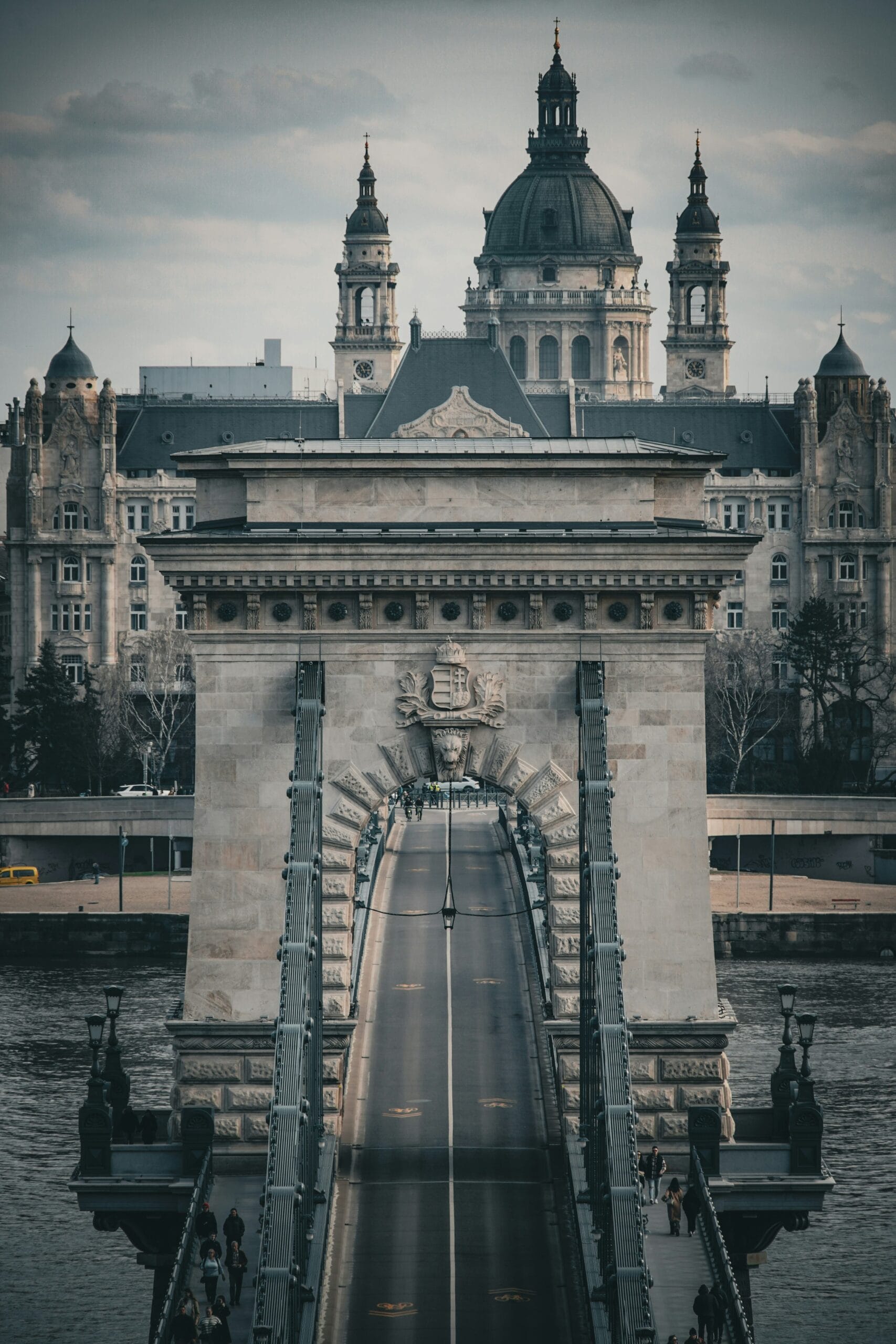
The Chain Bridge is one of the first landmarks most visitors associate with Budapest. Its position on the Danube, its historical role, and its symbolic meaning make it a natural starting point for understanding how Budapest developed into the city it is today.
Before looking at its history in detail, it helps to clearly understand what the bridge is, where it is located, and why it holds such an important place in the identity of the Hungarian capital.
What Is the Chain Bridge in Budapest?
This bridge is a historic suspension bridge over the Danube that connects Buda and Pest in the center of Budapest.
Officially called the Széchenyi Chain Bridge (Széchenyi Lánchíd), it links Széchenyi István tér on the Pest side with Clark Ádám tér on the Buda side, directly below Buda Castle. Because of this central location, it naturally connects several of Budapest’s main walking routes and sightseeing areas.
Opened in 1849, it was the first permanent bridge to connect the two sides of the river. Before its construction, people crossed the Danube using ferries or temporary pontoon bridges, which were removed every winter due to ice. This made travel unreliable and limited trade, communication, and everyday movement between Buda and Pest for much of the year.
The Chain Bridge solved this problem and permanently changed how the city functioned. Designed by British engineer William Tierney Clark and built under the supervision of Adam Clark, the bridge was considered a major technical achievement of its time. Its iron chains, massive stone pillars, and balanced proportions reflected the modern engineering ambitions of 19th-century Hungary.
Why Is It So Famous?
The Chain Bridge is famous because it was the first permanent bridge over the Danube in Hungary and became a powerful symbol of the connection between Buda and Pest.
By creating a stable, year-round crossing, the bridge played a decisive role in Budapest’s economic and social development. This connection helped prepare the way for the official unification of Budapest in 1873, turning the Chain Bridge into a lasting symbol of progress and modernization.
The bridge is named after Count István Széchenyi, one of Hungary’s most important reformers, who strongly supported its construction. His vision was not only practical, but also political: he believed that connecting Buda and Pest would strengthen the country and push Hungary toward a more modern future.
Its visual impact reinforces its fame. Guarded by four stone lions and framed by views of Buda Castle, the Hungarian Parliament, and the Danube, the Chain Bridge is one of the most photographed landmarks in the city. When illuminated at night, it becomes part of the UNESCO-listed Danube panorama.
Because of its history, symbolism, and central location, the Chain Bridge is widely considered the most famous bridge in Budapest and an essential stop on any visit to the city.
History of the Chain Bridge
The history of the bridge is closely linked to the birth of modern Budapest. Its construction was not only an engineering project, but also a political and social step that aimed to connect the city and improve everyday life on both sides of the Danube.
At the time, Buda and Pest functioned as separate towns, divided by the river and by the limits of seasonal crossings. Building a permanent bridge was seen as a way to remove these barriers and support long-term growth.
Who Was Behind Its Construction?
The Chain Bridge was designed by William Tierney Clark and built under the supervision of Adam Clark, with strong support from Count István Széchenyi.
The idea of constructing a permanent bridge across the Danube was promoted by Count István Széchenyi, one of the most influential Hungarian reformers of the 19th century. According to historical accounts, his personal experience of being unable to cross the frozen river in winter to attend his father’s funeral strengthened his determination to support the project.
The bridge was designed by British engineer William Tierney Clark, while construction was managed on site by the Scottish engineer Adam Clark. Despite sharing a surname, the two men were not related. Adam Clark later became closely associated with the bridge and is still remembered today through Clark Ádám tér, the square located at the Buda end of the bridge.
How Long Did Construction Take?
Construction of the Chain Bridge began in 1839 and was completed in 1849, making it the first permanent bridge over the Danube in Hungary.
Building a suspension bridge of this size was a demanding task for the period. Iron components were manufactured abroad and transported to Budapest, while the massive stone pillars were built directly on the riverbanks. Seasonal flooding and winter ice on the Danube slowed down the work and required technical solutions that were advanced for the time.
Despite these challenges, the bridge was officially opened in 1849. When it entered service, it was seen as a sign of progress and placed Budapest among the modern European capitals of the 19th century.
What Happened to the Chain Bridge During World War II?
The bridge was almost completely destroyed in 1945 during World War II and rebuilt shortly after.
During the Siege of Budapest, retreating German troops destroyed all major bridges over the Danube. In the case of the Chain Bridge, only the stone pillars remained standing, while the iron structure and roadway collapsed into the river.
After the war, rebuilding the bridge became a national priority. The Chain Bridge was reconstructed using the original plans and reopened in 1949, exactly 100 years after its first inauguration. This reopening reinforced its role as a symbol of recovery and continuity for the city.
An overview of the bridge’s destruction and reconstruction is also provided by official tourism sources.
The Symbols of the Chain Bridge
Beyond its historical role, the Chain Bridge is rich in symbolic elements that have become part of Budapest’s identity. The most recognizable of these are the four stone lions that guard the entrances to the bridge.
What Is the Meaning of the Stone Lions?
The lions symbolize strength, protection, and the importance of the bridge as a guarded link between Buda and Pest.
At each end of the Chain Bridge, two monumental stone lions stand at the base of the pillars, for a total of four statues. They were created by Hungarian sculptor János Marschalkó and installed a few years after the bridge opened.
Placed at the entrances, the lions mark the transition from one side of the city to the other. Over time, they have become one of the bridge’s most recognizable features and a favorite subject for photos, especially in the evening when the bridge is illuminated.
Do the Lions Really Have No Tongues?
Yes, the lions do have tongues, but they are carved flat and are difficult to see from below.
One of Budapest’s most popular local legends claims that the sculptor forgot to carve tongues for the lions and, ashamed of the mistake, jumped into the Danube. While this story is often told to visitors, it is not accurate.
If you look closely, especially from above or from the side, the lions’ tongues are clearly visible inside their mouths. The legend has survived for generations and has become part of the bridge’s folklore, adding a light and humorous note to the visit.
Visiting the Chain Bridge Today
The Chain Bridge is not only a historic monument but also part of everyday life in Budapest. Knowing how and when you can cross it, what it costs, and how to reach it will help you plan your visit smoothly and avoid confusion once you’re there.
Can You Walk Across the Chain Bridge in Budapest?
Yes, the Chain Bridge is open to pedestrians and you can walk across it freely.
The bridge has wide sidewalks on both sides, designed for people walking or cycling. Crossing it on foot is one of the best ways to enjoy open views of the Danube, Buda Castle, and the Hungarian Parliament. A relaxed walk with photo stops usually takes 15–20 minutes, although many visitors spend longer enjoying the scenery.
After the most recent renovation, traffic rules were updated to prioritize pedestrians, cyclists, taxis, and public transport. Private cars are generally restricted, which makes walking across the bridge safer and more pleasant than in the past.
Is It Free to Visit?
Yes, the Chain Bridge is completely free to cross.
There is no entrance fee to walk or cycle across the bridge, and it is open 24 hours a day. This flexibility makes it easy to include in your itinerary, whether you want to visit early in the morning, at sunset, or late at night.
Because there are no opening hours or tickets to manage, the bridge is often combined with other nearby attractions or used as part of a longer walk along the Danube.
How Do You Get to the Chain Bridge?
The Chain Bridge is easy to reach on foot or by public transport from both sides of the city.
| Side | Area | How to get there |
|---|---|---|
| Pest side | Széchenyi István tér | Tram 2 (Danube line), several bus lines, or a short walk from St. Stephen’s Basilica |
| Buda side | Clark Ádám tér | Bus connections and the lower station of the Buda Castle Funicular |
From the Pest side, the bridge is close to Vigadó Square, the Danube Promenade, and river cruise departure points. On the Buda side, it sits directly below Buda Castle, making it a natural starting point for exploring the Castle District.
Chain Bridge Views and Photography
The Chain Bridge is one of the most photographed landmarks in Budapest. Thanks to its position on the Danube and the monuments that surround it, it offers excellent views both from above and from the riverbanks, especially at sunset and after dark.
Is It Worth Seeing at Night?
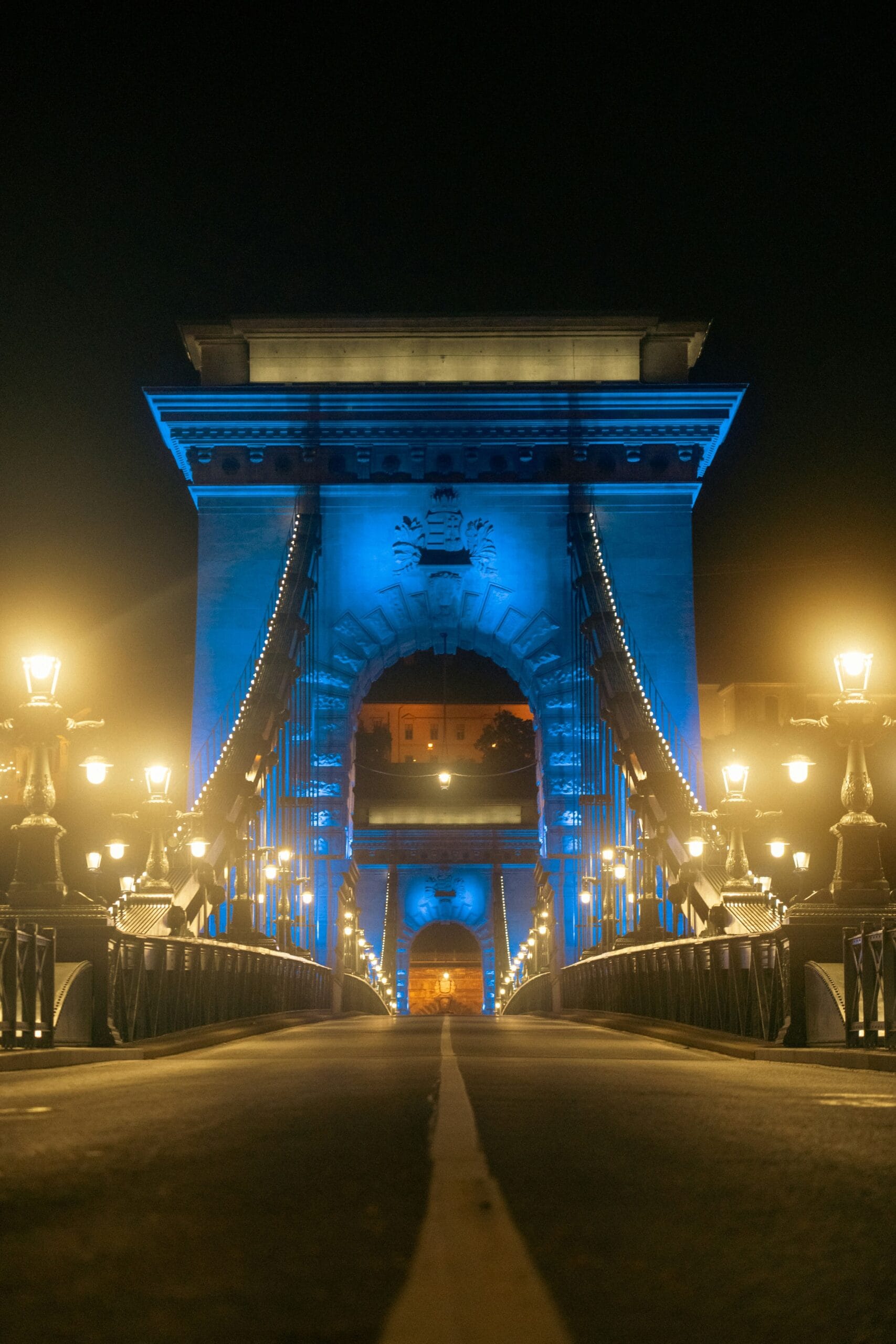
Yes, the Chain Bridge at night is one of the most impressive sights in Budapest.
After sunset, the bridge is fully illuminated with warm lighting that highlights its stone pillars, iron chains, and the four lions. At the same time, nearby landmarks such as Buda Castle and the Hungarian Parliament are also lit up, creating one of the most iconic night panoramas in the city.
Walking across the bridge in the evening feels very different from a daytime visit. There is less traffic noise, fewer crowds, and a calmer atmosphere. This is why many travelers consider a night walk across the Chain Bridge a must-do experience.
Where Are the Best Photo Spots?
The best views of the Chain Bridge are from the Danube riverbanks, Buda Castle Hill, and Danube river cruises.
Some of the most popular viewpoints include:
- Danube Promenade (Pest side): Walking north or south along the riverbank gives you clear views of the bridge with Buda Castle in the background. This is one of the easiest places for photos.
- Buda Castle Hill: From viewpoints near the Castle District or the Fisherman’s Bastion, you can see the entire bridge from above, along with the Pest skyline.
- From the bridge itself: Standing near the center of the bridge offers open views in both directions, ideal for photos that include the Danube and surrounding landmarks.
- Danube river cruises: River cruises pass directly under the bridge and provide a unique perspective, especially in the evening when the lights reflect on the water. Many cruises depart from nearby Vigadó Square.
Photography guides focused on Budapest regularly list these locations among the city’s top photo spots.
Chain Bridge and Nearby Attractions
Thanks to its central position, the Chain Bridge is surrounded by many of Budapest’s most important landmarks. It works perfectly as a starting point for a walk or as a natural link between sights on both sides of the river.
What Can You See Nearby on the Pest Side?
On the Pest side, the Chain Bridge is close to several major attractions.
Just a few steps from the Pest entrance, you’ll find Széchenyi István tér, one of the city’s most elegant squares. From here, you can easily reach:
- The Hungarian Parliament by walking north along the Danube riverbank
- Stephen’s Basilica, one of Budapest’s most important churches
- Vigadó Square, a common departure point for Danube river cruises
- Váci Street, the city’s main pedestrian shopping area
The Danube Promenade along this stretch of the river is ideal for a relaxed walk, offering open views of Buda Castle and Gellért Hill.
What Can You See Nearby on the Buda Side?
On the Buda side, the bridge gives direct access to the historic Castle District.
The Buda entrance is located at Clark Ádám tér, directly below Buda Castle Hill. From here, you can:
- Take the Buda Castle Funicular up to the Castle District
- Walk uphill to reach Buda Castle (Royal Palace)
- Continue to Matthias Church and the Fisherman’s Bastion, famous for their panoramic views
This side of the bridge is quieter and more historic, offering a clear contrast to the busier Pest side.
Is the Chain Bridge Worth Visiting?
The Chain Bridge is one of those places in Budapest that almost every visitor ends up seeing—but it is worth visiting on purpose, not just passing by.
It is free, open at all hours, easy to reach, and located between many of the city’s top attractions. Walking across it gives you a clear sense of Budapest’s layout and history, while the views of the Danube, Buda Castle, and the Hungarian Parliament make it one of the most memorable spots in the city.
If you want to better understand its role in Budapest’s history and how it fits into the wider story of the city, seeing it as part of a guided walk can add useful context. The bridge is included in the Best of Budapest Free Walking Tour, which covers the city’s main landmarks and explains how Buda and Pest developed over time.
Whether you visit during the day or see it illuminated at night, the Chain Bridge remains one of the strongest symbols of Budapest and an essential stop on any first visit to the city.