


- On 5 January, 2026
- In Places to see
- Tags: budapest parliament night, hungarian parliament budapest, hungarian parliament building, hungarian parliament tickets, hungarian parliament tour, parliament budapest inside, parliament building budapest, things to see near hungarian parliament, visit hungarian parliament
The Hungarian Parliament Building is one of the most recognisable landmarks in Budapest and a central symbol of the country. Standing on the Pest side of the Danube, it attracts visitors for its scale, its history, and its prominent position along the river. Its long façade, central dome, and riverside setting make it one of the most photographed buildings in the city.
More than just an architectural landmark, the Parliament is still the seat of Hungary’s National Assembly and plays an active role in the country’s political life. This mix of history, symbolism, and everyday function is what makes the building especially interesting for visitors. This guide explains what the Hungarian Parliament is, where it is located, and how it became such an important part of Hungary’s identity, starting with the essentials every visitor should know.
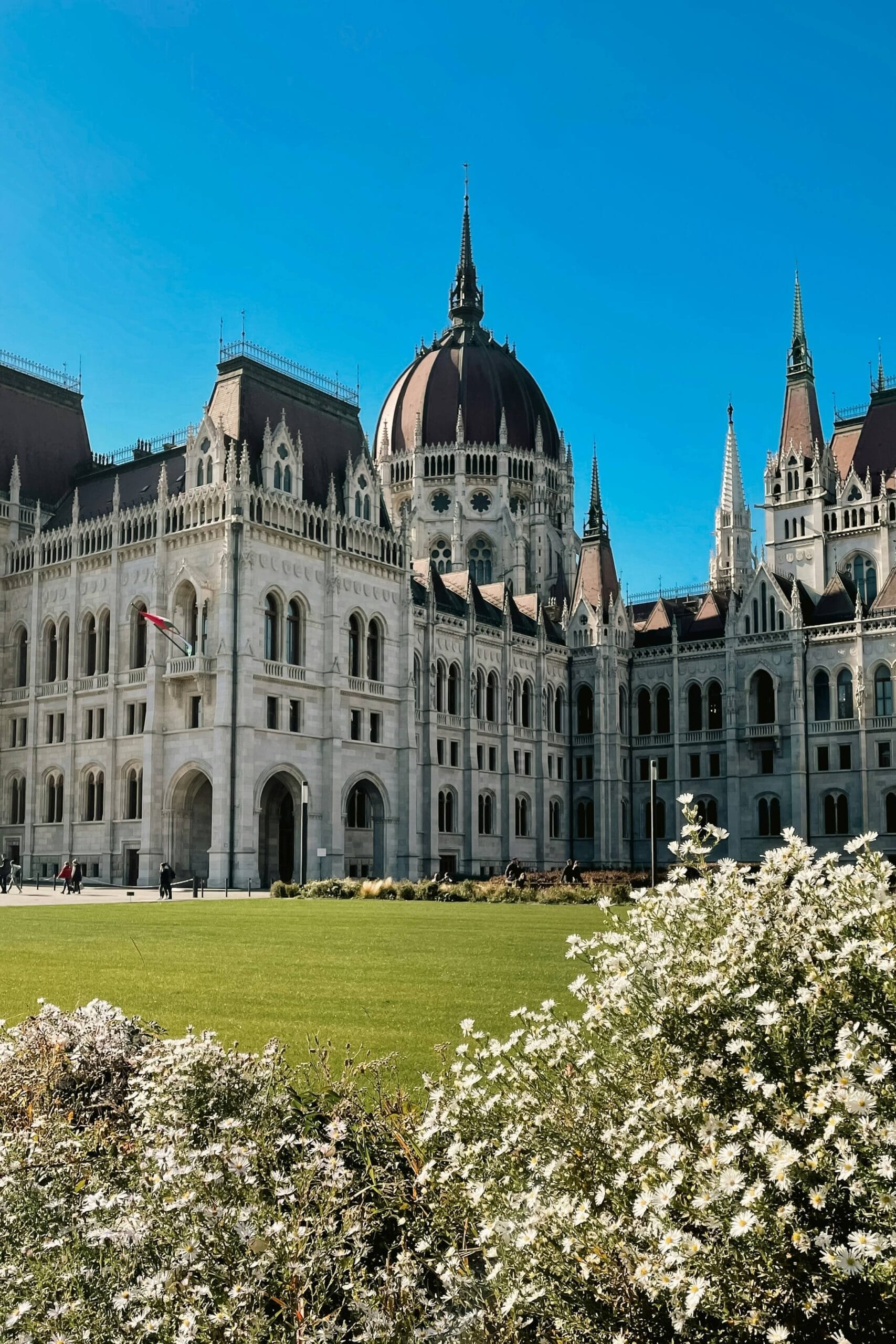
Budapest House of Parliament
The Hungarian Parliament Building is the seat of the National Assembly of Hungary and one of the country’s most important political institutions.
The building is where elected representatives meet, debate, and pass laws. Unlike many historic landmarks that function only as museums, the Parliament is still in active use today. Because of this, visitor access is regulated, and some areas are reserved exclusively for official duties.
What Is the Országház?
In Hungarian, the building is called Országház, which means “House of the Nation.” This name reflects its original purpose: a place meant to represent the Hungarian people and the state as a whole, not just a government office.
The need for a new Parliament building emerged after the Austro-Hungarian Compromise of 1867, when Hungary gained greater political autonomy. Budapest, unified as a single city in 1873, required a parliamentary building that matched its growing political and symbolic importance.
Where Is the Hungarian Parliament Located?
The Hungarian Parliament is located on the Pest side of Budapest, directly along the eastern bank of the Danube River.
The building stands next to Kossuth Lajos Square, a large public space closely linked to Hungary’s political history. From the river side, the Parliament forms part of the famous Danube panorama, with clear views toward Buda Castle on the opposite bank.
This location was chosen deliberately. Placing the Parliament along the Danube made it highly visible and symbolically connected political power with one of Budapest’s most important natural features. Today, this riverside setting also makes it one of the most photographed buildings in the city.
How Old Is the Hungarian Parliament Building?
The Hungarian Parliament Building was constructed between 1885 and 1904.
Construction began in the late 19th century, during a period of rapid development in Budapest. The building was already partially in use in 1896, during celebrations marking one thousand years since the founding of the Hungarian state in 896, even though interior work continued for several more years.
The project took nearly twenty years to complete and was one of the largest construction efforts in Hungary at the time. Thousands of workers and huge quantities of materials were involved, reflecting the ambition behind the project.
The Parliament was designed by Hungarian architect Imre Steindl in a Neo-Gothic style inspired by major European parliamentary buildings. Its design and scale were intended to express Hungary’s political confidence and national identity during the Austro-Hungarian period. Since its completion, the building has witnessed wars, political change, and public demonstrations, yet it has remained the centre of Hungarian political life.
Architecture and Symbolism of the Hungarian Parliament
The Hungarian Parliament Building is designed in a Neo-Gothic style with elements of Renaissance and Baroque architecture.
The dominant style is Neo-Gothic, clearly visible in the pointed arches, spires, decorative details, and strong vertical lines. This style was inspired by major European parliamentary buildings, especially the British Parliament in London, which was seen at the time as a model of constitutional governance.
At the same time, the building is not purely Gothic. The central dome reflects Renaissance influence, while the overall floor plan follows Baroque principles of symmetry and balance. This combination was intentional and aimed to create a building that felt both historic and monumental, while still representing a modern nation.
Why does the Hungarian Parliament look so symmetrical?
The Parliament was designed to be perfectly symmetrical to reflect balance and equality in political representation.
When the building was planned, Hungary had a bicameral parliament, with two legislative chambers. Each chamber had its own wing, laid out as mirror images on either side of the central dome. Even though Hungary later moved to a single-chamber system, the original symmetrical design remains unchanged.
This symmetry is visible from the outside, especially when viewed from across the Danube, and it plays a major role in the building’s visual impact.
Why is the number 96 important in the Hungarian Parliament?
The number 96 refers to the year 896, when the Magyar tribes settled in the Carpathian Basin.
This number appears several times in the building’s design. The central dome rises to a height of 96 metres, and the main ceremonial staircase has 96 steps. These choices were deliberate and meant to link the Parliament directly to the founding moment of the Hungarian state.
The same symbolic height can also be found in other key buildings in Budapest, reinforcing the idea that political and spiritual landmarks should share equal importance.
What materials were used to build the Hungarian Parliament?
Most of the materials used in the Parliament were sourced from within Hungary.
The building was constructed using millions of bricks, large quantities of carved stone, and decorative elements made by Hungarian craftsmen. Gold was used extensively inside for decoration, especially in ceremonial areas.
Using local materials was not only practical but symbolic. It reinforced the idea that the Parliament was a national project, built by and for Hungary.
What can you see inside the Hungarian Parliament Building?
Inside the Hungarian Parliament, visitors can see the grand main staircase, the Dome Hall with the Holy Crown, and the historic parliamentary chambers.
A guided visit inside the Hungarian Parliament reveals spaces designed to impress, but also to convey political authority and national identity. The interior follows a strict ceremonial route, allowing visitors to experience the most important areas without entering working offices.
The visit usually begins with the main staircase, one of the most striking spaces in the building. This staircase was designed to create a sense of importance and ceremony from the very first steps. Red carpets, gilded decorations, and large wall paintings accompany the ascent, while statues and lamps frame the space symmetrically. The scale of the staircase is deliberate: it was meant to reflect the power and dignity of the state.
From here, the tour leads to the Dome Hall, the symbolic heart of the Parliament. This circular space sits directly beneath the central dome and connects the two wings of the building. The Dome Hall is where the Holy Crown of Hungary is displayed, together with other royal insignia. Guards stand watch at all times, and the atmosphere is noticeably quieter and more formal than in other parts of the building. For many visitors, this is the highlight of seeing the Parliament from the inside, as the Holy Crown represents centuries of Hungarian statehood.
The tour also includes access to one of the parliamentary chambers. Originally, the building had two chambers, reflecting a bicameral system. Today, only one chamber is used for parliamentary sessions, while the other is shown to visitors. Inside the chamber, you can see rows of wooden benches, the speaker’s seat, and decorative elements that emphasise hierarchy and order. Guides usually explain how debates take place and how the space was used historically.
Throughout the interior, visitors notice extensive use of gold decoration, stained glass windows, detailed woodwork, and painted ceilings. These elements are not random decoration. They were chosen to reflect Hungarian history, values, and continuity. Motifs include coats of arms, historical figures, and symbolic patterns repeated across rooms.
Seeing the Parliament from the inside helps visitors understand that the building is not only architecturally impressive, but also carefully designed to communicate power, tradition, and national identity through every space.
Hungarian Parliament Tickets and Tours
Can you enter the Hungarian Parliament Building?
Yes, but only through organised guided tours.
Because the Parliament is an active government building, visitors cannot enter freely. Access is limited to guided tours that follow a fixed route and schedule. These tours are designed to allow visitors inside while keeping parliamentary work undisturbed.
Security checks are mandatory, similar to those at airports. On days when official sessions or state events take place, tour availability may be reduced or cancelled.
How does the Hungarian Parliament tour work?
The visit follows a guided route through the most important ceremonial areas.
Tours usually last around 45 minutes. Visitors enter through the underground visitor centre and are guided through selected parts of the building, including staircases, halls, and the central dome area.
Tours are available with live guides in several languages, as well as audio guides in many others. Independent exploration is not allowed, and visitors must stay with the group at all times.
Official tour details and updates are published on the Parliament’s visitor page.
How much does it cost to visit the Hungarian Parliament?
Ticket prices depend on age and whether you are an EU or non-EU citizen. Prices are generally higher for non-EU visitors, while discounts are available for students and children. Children under the age of 6 can enter for free.
Below is a summary of the current ticket prices for guided tours of the Hungarian Parliament.
| Ticket type | Eligibility | Price (HUF) | Approx. Price (EUR) |
|---|---|---|---|
| Standard ticket | EEA citizens | 7,000 | ~18 EUR |
| Student ticket | EEA citizens (ages 6–24) | 3,500 | ~9 EUR |
| Standard ticket | Non-EEA citizens | 14,000 | ~36 EUR |
| Student ticket | Non-EEA citizens (ages 6–24) | 7,000 | ~18 EUR |
Family tickets are also available at a reduced rate.
| Ticket type | Eligibility | Price (HUF) | Approx. Price (EUR) |
|---|---|---|---|
| Family ticket (adults) | EEA citizens (max 2 adults) | 4,900 | ~12 EUR |
| Family ticket (children) | EEA students (ages 6–14, max 3 children) | 2,450 | ~6 EUR |
| Family ticket (adults) | Non-EEA citizens (max 2 adults) | 11,200 | ~28 EUR |
| Family ticket (children) | Non-EEA students (ages 6–14, max 3 children) | 5,600 | ~14 EUR |
Ticket prices can change during the year, so it’s always best to check the official pricing page before your visit.
Where should you buy Hungarian Parliament tickets?
Tickets should be bought from the official Parliament website.
Buying tickets directly from the official source helps avoid overpaying or purchasing invalid tickets. Third-party resellers often charge higher prices or offer less flexibility.
During peak seasons, tickets can sell out days in advance, so booking ahead is strongly recommended. Same-day tickets are not always available, especially in spring and summer.
Official ticket sales and booking information are available here.
Do Hungarian Parliament Tickets Sell Out?
Yes, tickets often sell out, especially during peak tourist seasons.
From spring to early autumn, guided tours can be fully booked several days in advance. Availability is more limited during weekends, public holidays, and periods of high tourist traffic.
If you have fixed travel dates, booking tickets ahead of time is the safest option. Same-day tickets are sometimes available, but they cannot be relied on during busy periods.
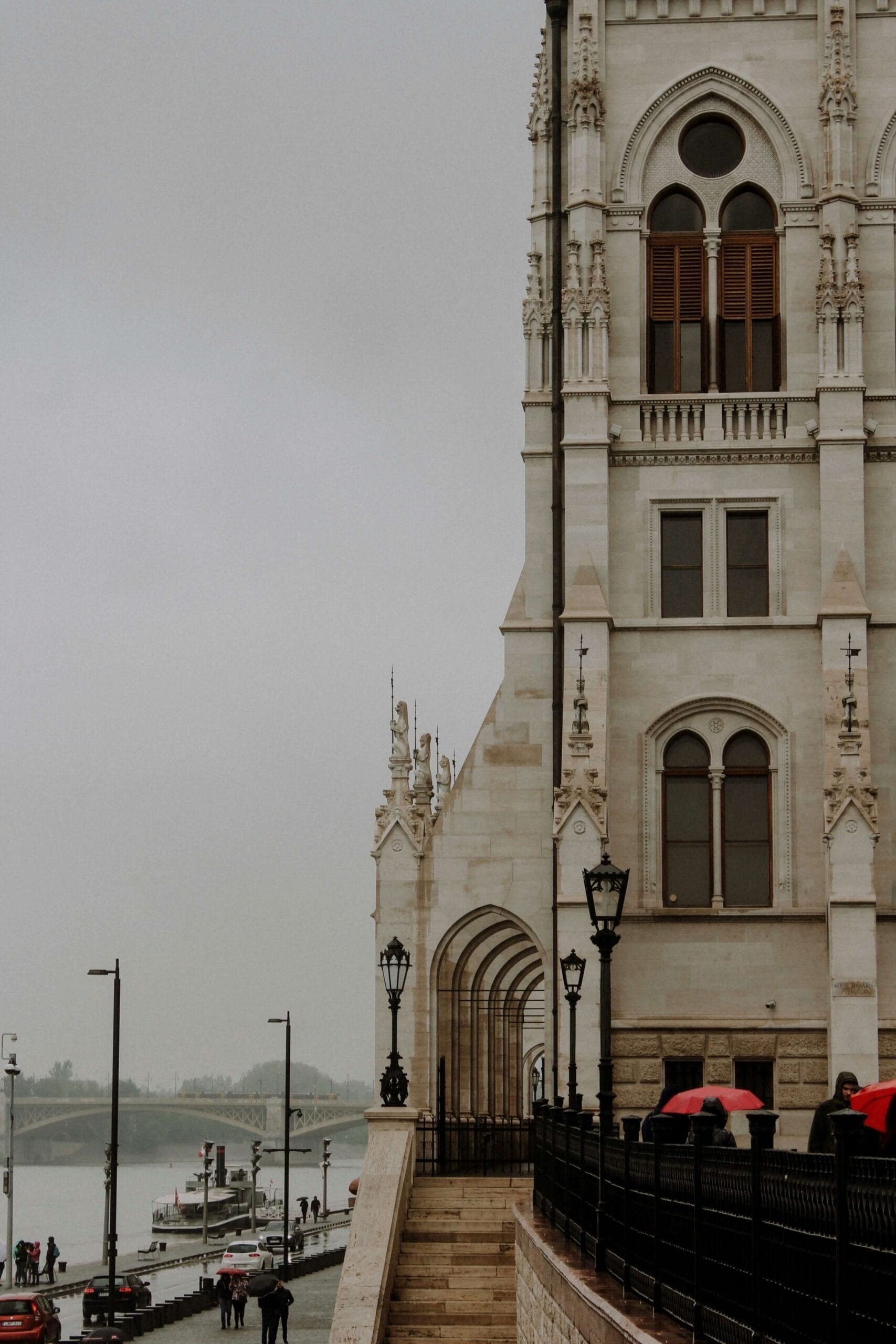
Visiting the Hungarian Parliament Building
Best Time to Visit the Hungarian Parliament
Morning visits are usually the least crowded and more relaxed.
Earlier time slots tend to have smaller groups and shorter waiting times for security checks. Midday and early afternoon tours are typically busier, especially in summer.
From a seasonal point of view, spring and autumn offer a good balance between pleasant weather and manageable crowd levels. Winter is quieter, while summer is the busiest time of the year.
How to Get to the Hungarian Parliament
The Hungarian Parliament is easy to reach by public transport or on foot.
The closest metro stop is Kossuth Lajos tér on Metro Line M2. Tram line 2 runs along the Danube and stops directly near the Parliament, offering one of the most scenic public transport routes in Budapest.
Thanks to its central location, many visitors reach the Parliament while walking along the river or as part of a city walking tour.
Hungarian Parliament at Night and Photo Spots
Is the Hungarian Parliament Lit Up at Night?
After sunset, the building is lit to highlight its architectural details and long riverside façade, making it one of the most recognisable night-time sights in Budapest.
On non-festive days, the lights are switched off at 10:00 pm as part of energy-saving measures. During national holidays or special events, illumination may last longer.
Visiting shortly after sunset allows you to enjoy the full lighting while also benefiting from a calmer atmosphere along the Danube.
Best Places to Photograph the Hungarian Parliament
The best photo spots are along the Danube and from the Buda side of the river.
Popular viewpoints include the Danube promenade on the Pest side, Batthyány Square on the Buda side, and tram line 2, which runs directly along the riverbank.
River cruises also offer excellent photo opportunities, especially in the evening when the building is illuminated.
History Around the Hungarian Parliament
The area surrounding the Hungarian Parliament is one of the most historically significant parts of Budapest. It has not only been the setting for political events and public demonstrations, but also for some of the most tragic moments of the 20th century in Hungary.
One of the most meaningful places near the Parliament is the Shoes on the Danube Bank memorial, located just a few minutes’ walk from the building.
The Shoes on the Danube Bank Memorial
This memorial commemorates the Jews who were murdered during World War II and executed at this very location between 1944 and 1945 by members of the fascist Arrow Cross Party.
Victims were forced to remove their shoes before being shot and thrown into the river. The iron shoes placed along the riverbank represent men, women, and children. There are no long explanations or large monuments, which makes the impact of the memorial even more direct and powerful.
Today, the memorial is a place of remembrance and respect, visited by both locals and travellers. It is common to see flowers, candles, or small stones placed beside the shoes as a gesture of tribute.
Why Is This Area So Important in Hungarian History?
Kossuth Lajos Square and its surroundings have been the stage for major political events throughout the 20th century. Protests, official ceremonies, and public gatherings reflecting Hungary’s political changes have taken place here.
During the 1956 Hungarian Revolution, this area was one of the key points of the demonstrations against the communist regime. Even today, the Parliament and its surroundings remain central to Hungary’s political and social life.
Visiting this area not only allows travellers to admire one of Europe’s most impressive buildings, but also to better understand Budapest’s recent history and the country’s past.
Practical Tips Before Visiting the Hungarian Parliament
Dress Code and Security Rules Inside the Parliament
Visitors must follow security rules similar to those at airports.
All visitors pass through security screening. Large bags are not allowed, and photography is restricted in certain areas inside the building. Clothing should be respectful, as this is an active government institution.
Arriving early helps avoid delays, especially during busy periods.
Is the Hungarian Parliament Wheelchair Accessible?
Yes, the Hungarian Parliament is accessible to visitors with reduced mobility.
Ramps and elevators are available along the official visitor route. Visitors who require assistance are advised to contact the Parliament in advance so staff can prepare appropriate support.
Is it worth going inside the Hungarian Parliament Building?
Yes, visiting the interior of the Hungarian Parliament is worth it for most visitors.
From the outside, the building is impressive, but the interior shows its full scale and meaning. Guided tours allow access to ceremonial spaces that are not visible from outside, including grand staircases, historic halls, and the central dome area.
For visitors interested in history, architecture, or politics, the interior visit adds important context to what the building represents. If you prefer only exterior sightseeing and photography, seeing the Parliament from outside may be enough, but the interior offers a deeper understanding of its role and symbolism.
To place the Hungarian Parliament in a wider historical and political context, you can also join our Best of Budapest Free Walking Tour. The tour stops outside the Parliament and explains its role both in Hungary’s past and in present-day politics, while also covering nearby sites such as Liberty Square, monuments from the Communist period and the 1956 Revolution, the Chain Bridge, the Danube riverbank, St. Stephen’s Basilica, and Sissi’s Square.