


What Is Várkert Bazár?
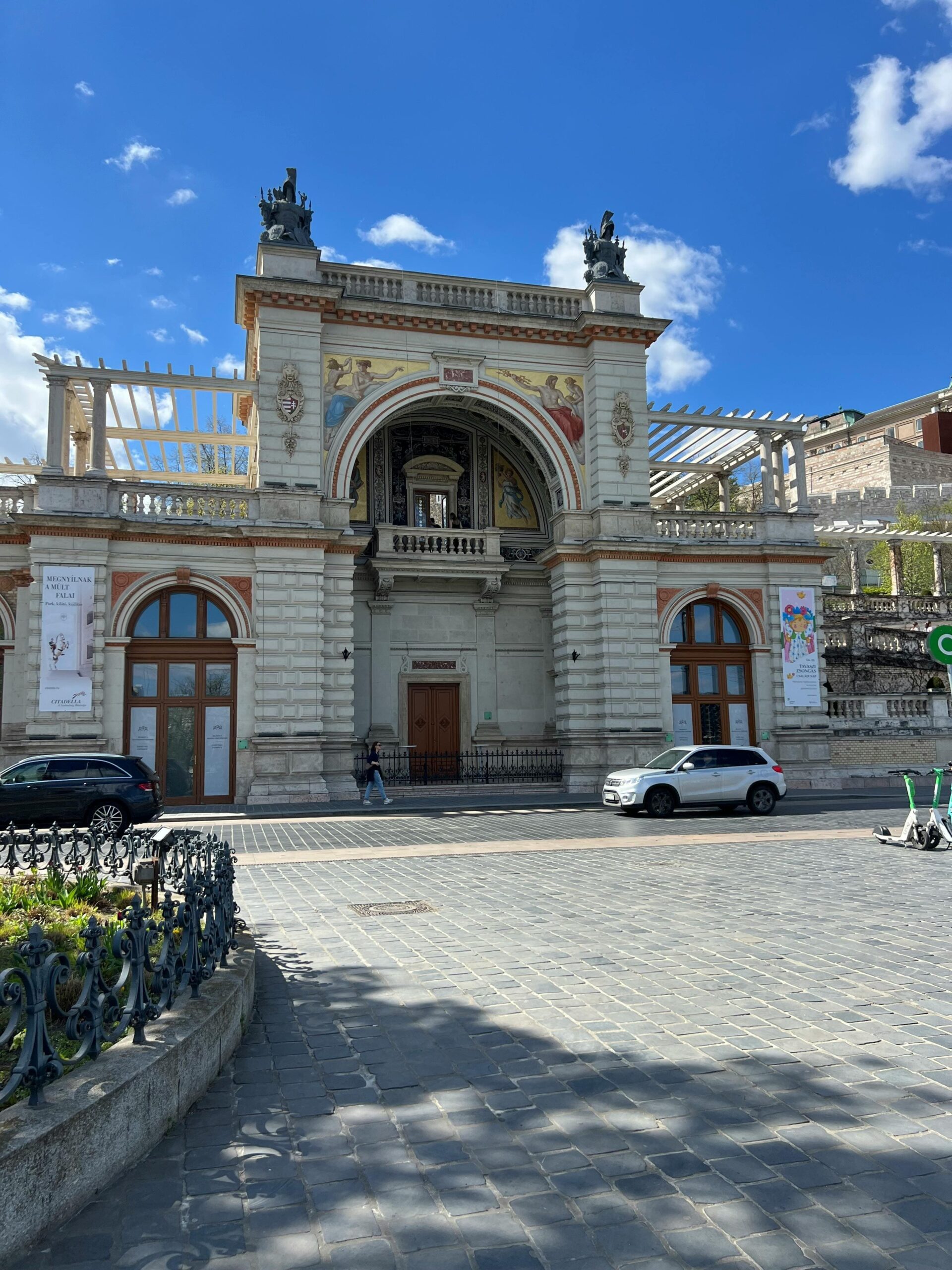
Várkert Bazár, known in English as the Castle Garden Bazaar, is a historic garden and cultural complex located on the Buda side of Budapest, between the Danube River and Buda Castle. Designed by the famous Hungarian architect Miklós Ybl and completed in 1883, it originally served as the elegant riverside entrance to the Royal Palace gardens.
Today, the complex is one of the most scenic areas in Budapest, featuring landscaped terraces, exhibition spaces, historic stairways, and cultural venues built into the slopes of Castle Hill. It is also part of the UNESCO World Heritage area that includes the Buda Castle District and the Banks of the Danube.
| Information | Details |
|---|---|
| Location | Buda riverfront, below Buda Castle |
| Built | 1875–1883 |
| Architect | Miklós Ybl |
| Entry | Free for outdoor areas |
| Best For | Views, gardens, sunset walks |
| Visit Duration | 30 minutes to 2 hours |
| Closest Tram | Tram 19 & 41 |
| Nearest Landmark | Chain Bridge & Buda Castle |
Why Is Várkert Bazár Famous?
Várkert Bazár is famous for its elegant architecture, peaceful gardens, and unique position between the river and Castle Hill. Compared to busier viewpoints in Budapest, the atmosphere here often feels more relaxed, especially during early mornings and around sunset.
The complex is also known for its unusual transformation over time. What began as a royal entrance later became artist studios, a legendary communist-era music venue, and eventually one of Budapest’s most important cultural landmarks after its restoration in 2014.
Is Várkert Bazár Part of Buda Castle?
Yes. Várkert Bazár is part of the wider Buda Castle District and acts as one of the main connections between the Danube riverfront and the Royal Palace area above Castle Hill. Many visitors use its terraces, stairways, escalators, and elevators as a scenic alternative to the nearby Funicular.
The Fascinating History of Várkert Bazár
The history of Várkert Bazár reflects many different chapters of Budapest itself. Originally imagined as a luxurious riverside entrance for the Royal Palace, the complex later became an artist district, a famous music venue during the communist period, and eventually one of the city’s most important heritage restoration projects.
The Royal Vision Behind Castle Garden Bazaar
In the second half of the 19th century, Budapest was rapidly transforming into one of the great capitals of the Austro-Hungarian Empire. While the Pest side was developing quickly with grand boulevards and monumental buildings, the Buda riverfront still looked relatively undeveloped. To modernize this area and create a more elegant connection to the Royal Palace, architect Miklós Ybl was commissioned to design Várkert Bazár.
Built between 1875 and 1883, the complex was conceived as a sophisticated riverside arcade with boutiques, ornamental pavilions, stairways, fountains, and landscaped gardens. The goal was to create both a prestigious entrance to the royal residence and a fashionable leisure space along the Danube.
Why the Luxury Arcade Failed
Despite the ambitious vision, the commercial side of the project never truly succeeded. The luxury shops attracted fewer visitors than expected, partly because the riverside location remained less active than the rapidly growing commercial districts on the Pest side.
Over time, many boutiques closed and the spaces were gradually converted into artist studios. Several important Hungarian sculptors and painters worked here, giving the complex a more artistic identity rather than the elegant shopping arcade originally imagined.
The Legendary “Ifipark” Music Era
After suffering heavy damage during World War II, Várkert Bazár entered a completely different phase of its history. During the communist era, the site was transformed into the famous Budai Ifjúsági Park, commonly known as “Ifipark.”
Between the 1960s and the 1980s, the area became one of the most important open-air music venues in Hungary. Major Hungarian rock and pop bands performed here, and for many young people it represented a rare space of cultural freedom behind the Iron Curtain. Concerts held inside the aging royal complex eventually gave Ifipark an almost legendary status in Hungarian popular culture.
WWII Damage, Decay and Restoration
The Siege of Budapest during World War II caused severe damage to the buildings and gardens of Várkert Bazár. In the decades that followed, only limited maintenance was carried out, and the complex slowly deteriorated.
The situation worsened after a structural accident in 1980, when part of a stone balustrade collapsed during a concert. Ifipark eventually closed in 1984, and the area remained abandoned for decades. At one point, the condition of the site became so serious that it appeared on international lists of endangered heritage monuments.
The Rebirth of Várkert Bazár in 2014
After years of debate about its future, Várkert Bazár was finally included in the National Hauszmann Programme, a large initiative focused on restoring the historic Buda Castle District.
Following an extensive reconstruction project, the complex officially reopened in 2014. The restoration carefully recreated the original architecture while integrating modern exhibition spaces, elevators, escalators, and cultural venues behind the historic façades.
Today, Várkert Bazár has become one of Budapest’s leading cultural and leisure destinations, attracting both locals and tourists with its exhibitions, gardens, events, and riverside atmosphere.
What to See at Várkert Bazár
Although many visitors come mainly for the atmosphere and the riverside walk, Várkert Bazár offers much more than a simple promenade. The complex combines historic architecture, landscaped gardens, panoramic terraces, fountains, exhibition spaces, and hidden historical details connected to both the royal era and Budapest’s Ottoman past.
Because the site is built across multiple levels between the Danube and Castle Hill, exploring Várkert Bazár feels very different from visiting a traditional square or monument. Walking through the stairways, arcades, and terraces is part of the experience itself.
The Neo-Renaissance Gardens
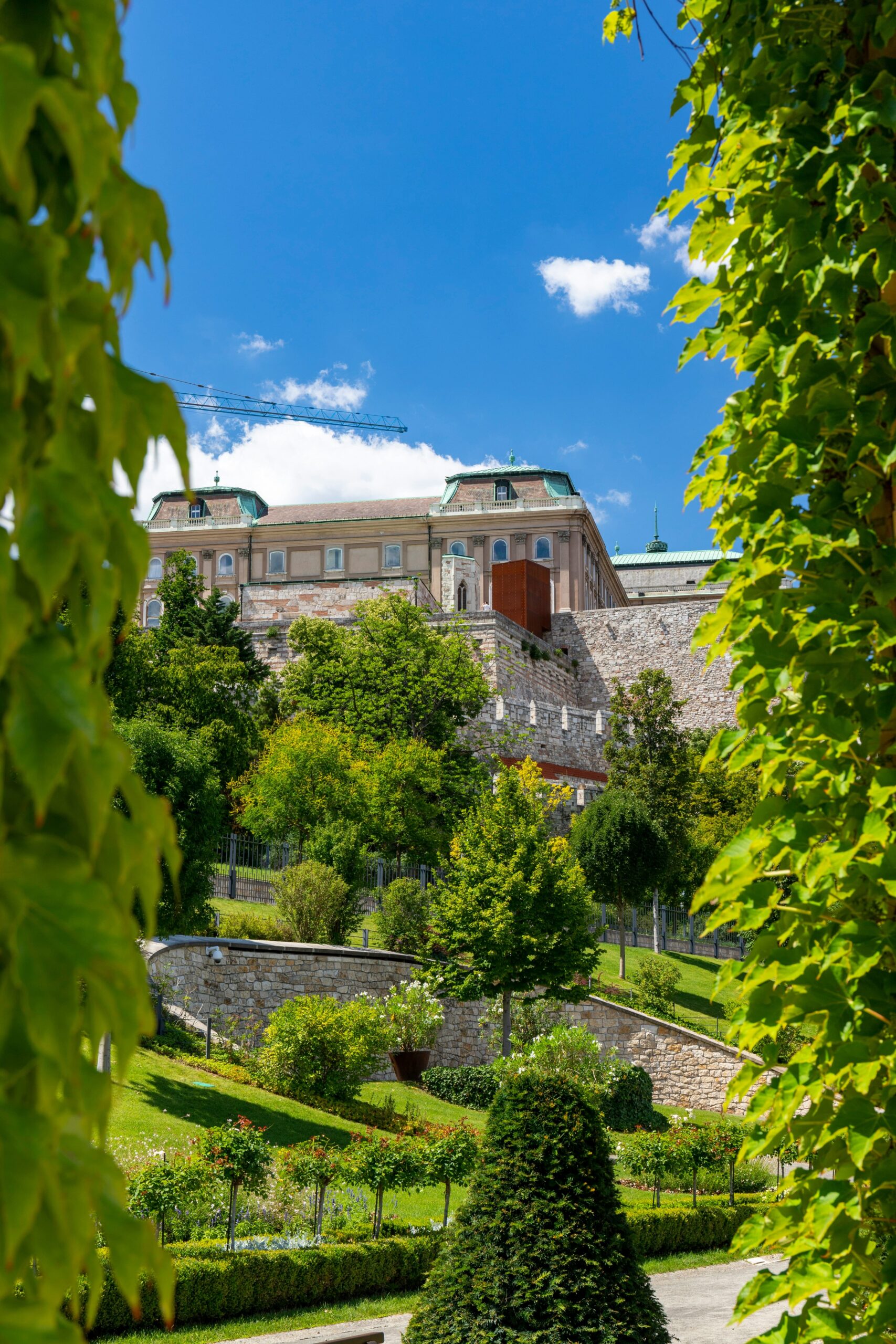
The gardens of Várkert Bazár are among the most elegant green spaces in central Budapest. Carefully restored during the 2014 renovation, they feature decorative hedges, flowerbeds, promenades, and terraced walkways inspired by 19th-century royal garden design.
The upper sections of the gardens are especially atmospheric during spring and early autumn, when the vegetation and softer light make the complex feel almost hidden from the busy streets below.
The Gloriette and Triton Fountain
One of the architectural highlights of the complex is the Gloriette, a symmetrical pavilion decorated with murals, ramps, and sculptural details typical of Miklós Ybl’s design style.
Nearby, visitors can also see the Triton Fountain, which depicts the mythological sea god Triton together with Cupid figures. The fountain was carefully recreated during the restoration using historical photographs and archival documents.
The Terraced Stairways and Panoramic Views
The stairways and terraces connecting the riverfront to Castle Hill are one of the most distinctive elements of Várkert Bazár. Rather than simply serving as access routes, these staircases were designed as part of the overall architectural composition.
As you climb through the different levels, the city gradually opens around you. The changing perspectives over the Danube, the bridges, and the Parliament building make the ascent itself one of the highlights of visiting the complex.
The Exhibition Halls and Cultural Spaces
Behind the historic façades, Várkert Bazár now hosts modern exhibition halls, galleries, event spaces, and cultural venues. Throughout the year, the complex organizes temporary art exhibitions, concerts, festivals, film screenings, and seasonal cultural programs.
The courtyards and open-air terraces are especially lively during summer evenings, when concerts and festivals bring music and nightlife into the historic setting.
Hidden Ottoman and Medieval Discoveries
During the restoration works, archaeologists uncovered traces of Budapest’s earlier history hidden beneath the complex. Among the discoveries were Ottoman-era artifacts and the remains of 16th-century cannon foundries connected to the defensive system of Buda Castle.
Today, some of these discoveries are commemorated inside the Foundry Court through modern architectural elements that reference the site’s military and industrial past.
Is Várkert Bazár Free to Visit?
One of the main reasons why Várkert Bazár has become increasingly popular among travelers is that much of the complex can be visited completely free of charge. Unlike several other attractions in the Buda Castle District, visitors can freely explore the promenades, gardens, terraces, stairways, and courtyards without purchasing a ticket.
The outdoor areas are open daily from early morning until late evening, making Várkert Bazár a popular place for walks, photography, sunset views, and relaxing along the Danube. Many locals also use the gardens as a quieter alternative to the busier areas around Fisherman’s Bastion.
Which Areas Are Free?
The main outdoor sections of the complex are free to access, including the terraced gardens, panoramic walkways, decorative staircases, courtyards, and viewpoints overlooking the Danube and the Pest skyline.
Visitors can also use several parts of the internal circulation system, including the escalators and elevators connecting the lower riverfront area with the upper Castle Hill terraces. This allows travelers to reach Buda Castle while enjoying the architecture and scenery along the way.
Free Escalators and Lifts to Buda Castle
One of the best local tips is using the free escalators and elevators inside Várkert Bazár instead of paying for the nearby Buda Castle Funicular. While the Funicular is famous and historic, it is often crowded and relatively expensive for a very short ride.
The Várkert Bazár route offers a much more enjoyable experience. As you move through the gardens and terraces, the city slowly opens in front of you, with views of the Chain Bridge, the Parliament, and the Danube accompanying the climb toward Castle Hill.
Do You Need Tickets for Exhibitions and Events?
Although the outdoor complex is free, some indoor attractions require a ticket. Temporary exhibitions, concerts, festivals, cultural programs, and special events hosted inside the exhibition halls or courtyards usually have separate admission fees.
Throughout the year, Várkert Bazár hosts art exhibitions, open-air concerts, seasonal festivals, and cultural events that attract both locals and tourists. During large events, certain sections of the complex may also have restricted access or modified opening hours.
Is Várkert Bazár Worth Visiting?
Yes, Várkert Bazár is absolutely worth visiting, especially if you enjoy architecture, photography, riverside walks, or quieter areas away from the busiest tourist crowds. While many visitors focus mainly on Buda Castle or Fisherman’s Bastion, the Castle Garden Bazaar offers a more relaxed experience that combines history, gardens, culture, and beautiful city views.
Its location between the Danube and Castle Hill also makes it a natural stop while exploring the Buda side of the city. Whether you spend thirty minutes walking through the terraces or a few hours visiting exhibitions and climbing toward the castle, Várkert Bazár fits naturally into almost any Budapest itinerary.
Why It’s One of Budapest’s Hidden Gems
Despite being located in the heart of the UNESCO-listed Castle District, Várkert Bazár remains far less crowded than nearby attractions. Many tourists simply pass by on their way to Buda Castle without realizing how much there is to explore inside the complex.
The atmosphere is very different from the busy streets around Fisherman’s Bastion. Here, visitors can walk through landscaped gardens, historic stairways, and quiet promenades while enjoying uninterrupted river views and the elegant architecture surrounding Castle Hill.
Better Views Than Fisherman’s Bastion?
For many travelers, the upper terraces of Várkert Bazár offer some of the best panoramas in Budapest. From here, you can see the Chain Bridge, the Hungarian Parliament, the Danube River, and much of the Pest side without the large crowds usually found at Fisherman’s Bastion.
The viewpoints are particularly beautiful during sunset and in the evening, when the bridges and historic buildings become illuminated. Because access to most terraces is free, it is also one of the best budget-friendly viewpoints in the city.
The Best Time for Photos and Sunset
Várkert Bazár is especially popular with photographers thanks to its combination of historic architecture, fountains, gardens, stairways, and open views across the Danube.
Early morning is ideal for quieter walks and softer light, while sunset creates spectacular reflections over the river and illuminates the Parliament and the bridges on the Pest side. Evening visits are also highly recommended, as the illuminated skyline gives the complex a completely different atmosphere after dark.
How Much Time Do You Need?
A short visit to Várkert Bazár usually takes around 30 to 60 minutes if you simply want to walk through the gardens and enjoy the terraces. However, many visitors spend much longer here, especially if they combine the visit with Buda Castle, exhibitions, cafés, or cultural events.
If you plan to explore the different levels slowly and continue walking toward Castle Hill, it is worth allowing at least 1-2 hours for the full experience.
Events and Cultural Life
Today, Várkert Bazár is not only a historic landmark but also one of Budapest’s most active cultural venues. After its restoration in 2014, the complex was transformed into a multifunctional space hosting exhibitions, concerts, festivals, film screenings, and public events throughout the year.
The combination of historic architecture, open-air courtyards, and terraced gardens creates a unique setting for cultural programs, especially during the warmer months when much of the activity moves outdoors.
Concerts and Summer Festivals
Várkert Bazár has a long connection with music and live performances dating back to the famous “Ifipark” era during the communist period. Today, concerts remain an important part of the complex’s identity.
During summer, the courtyards and terraces regularly host open-air performances ranging from classical music and jazz to contemporary electronic and pop events. Seasonal festivals and wine events also attract both locals and tourists, especially during evenings along the riverfront.
Art Exhibitions and Historic Interiors
Several buildings inside the complex are used for temporary exhibitions focused on art, photography, history, and Hungarian culture. The restored interior spaces combine modern galleries with historic architectural details, creating an interesting contrast between contemporary exhibitions and the original 19th-century design.
Some programs are also connected to the wider Buda Castle District and the National Hauszmann Programme, which focuses on restoring the historical heritage of Castle Hill.
Christmas and Seasonal Events
During the winter season, Várkert Bazár hosts smaller Christmas and Advent programs, including seasonal decorations, cultural fairs, concerts, and festive events connected to the Buda Castle area.
Spring and autumn are also excellent periods to visit thanks to the gardens, comfortable temperatures, and quieter atmosphere compared to the busy summer months.
How to Get to Várkert Bazár
Várkert Bazár is located on the Buda side of Budapest, directly between Chain Bridge and Elizabeth Bridge along the Danube riverfront. Thanks to its central location, the complex is easy to reach on foot or by public transport from almost anywhere in the city.
Many visitors include Várkert Bazár as part of a larger walk through the Buda Castle District, especially because the terraces and stairways connect naturally with Castle Hill above.
Walking From Chain Bridge
One of the easiest and most scenic ways to reach Várkert Bazár is by walking from Chain Bridge. From the Buda side of the bridge at Clark Ádám Square, the complex is only a few minutes away along the riverfront promenade.
This route immediately introduces visitors to the lower terraces and gardens while offering beautiful views along the Danube.
Tram, Bus and Metro Connections
The most convenient public transport option is tram 19 or 41, which runs along the Buda embankment. The stop “Várkert Bazár” or “Ybl Miklós tér” is located directly in front of the complex.
Visitors coming from central Pest can also use buses 16 or 105 to Clark Ádám tér and continue on foot for a couple of minutes along the river.
The nearest metro station is Batthyány tér on the M2 red line. From there, Várkert Bazár can be reached with a pleasant walk along the Danube promenade.
Boat Access on the Danube
During certain seasons, some public or sightseeing boat services stop near Várkert Bazár, offering one of the most scenic arrivals in Budapest.
Approaching the complex from the river provides a completely different perspective of the terraces, gardens, and Castle Hill rising above the embankment.
Walking From Buda Castle
Várkert Bazár also works as a natural extension of the Buda Castle District. Visitors already exploring Castle Hill can reach the complex by descending through the historic stairways and terraces on the southern side of the castle area.
Many travelers actually prefer this route because it combines architecture, gardens, and changing river views while gradually descending toward the Danube.
Practical Information for Visitors
Before visiting Várkert Bazár, it is useful to know a few practical details about opening hours, accessibility, and the best times to explore the complex. Since much of the experience takes place outdoors across terraces and stairways, planning your visit in advance can make a big difference, especially during summer events or sunset hours.
Opening Hours
The outdoor gardens and terraces are generally open daily from early morning until late evening, making Várkert Bazár one of the few major attractions in Budapest that can also be enjoyed comfortably at sunrise or after dark.
Exhibition halls, galleries, and cultural spaces usually follow separate opening hours depending on the current events and temporary exhibitions.
Tickets and Admission
Access to the gardens, promenades, courtyards, and viewpoints is completely free. Tickets are only required for temporary exhibitions, concerts, film screenings, and special cultural events organized inside the complex.
Because many events are seasonal, it is always a good idea to check the official Várkert Bazár website before visiting.
Accessibility
Following the 2014 restoration, the complex became significantly more accessible than in the past. Elevators, escalators, and ramps now connect several levels between the riverfront and Castle Hill, allowing visitors to avoid many of the steeper stairways.
However, some historic sections still include cobblestones, slopes, and uneven surfaces, which can be more difficult for visitors with reduced mobility.
Photography Tips
Várkert Bazár is considered one of the best photography spots in Budapest thanks to its combination of historic architecture, gardens, stairways, fountains, and open river views.
The upper terraces are especially popular during golden hour and after sunset, when the Parliament, bridges, and the Pest skyline become illuminated. Early morning is usually the quietest moment for photography, while summer evenings tend to attract larger crowds because of concerts and cultural events.
Local Tips Before You Visit
Comfortable walking shoes are highly recommended, especially if you plan to continue toward Buda Castle using the stairways and terraces. During summer, carrying water is also useful since parts of the complex receive strong sun exposure during the afternoon.
If possible, try visiting on a weekday morning or around sunset. These are usually the best moments to experience the gardens and viewpoints without the busiest tourist crowds. Travelers looking for a quieter atmosphere than Fisherman’s Bastion often end up preferring Várkert Bazár for exactly this reason.
Conclusion
Várkert Bazár is much more than a simple viewpoint or riverside promenade. Its combination of royal history, elegant architecture, terraced gardens, cultural spaces, and scenic walks makes it one of the most unique places to visit in Budapest. Whether you come for the atmosphere, the history, the evening lights over the Danube, or the walk up to Castle Hill, the Castle Garden Bazaar offers a quieter and more authentic side of the city compared to many of Budapest’s busier attractions.
If you want to explore the area in more depth and better understand the history of Castle Hill, the Royal Palace, Matthias Church, and Fisherman’s Bastion, joining a guided tour is one of the best options. Our Buda Castle Free Tour is a great way to discover the stories, legends, and hidden corners of Buda with local guides while exploring one of the most beautiful areas of Budapest on foot.