


- On 13 April, 2026
- In Places to see
- Tags: buda castle attractions, church in budapest hungary, matthias church buda castle, matthias church budapest, matthias church history, matthias church interior, matthias church opening hours, matthias church tickets, st matthias church budapest, Things To Do in Budapest
Matthias Church is one of the most iconic landmarks in Budapest and a key highlight of the Buda Castle District. Located on Castle Hill, it stands out for its colorful tiled roof, rich history, and strong connection to Hungarian royalty. For many visitors, it is one of the most memorable stops in the city, both for its striking exterior and its detailed interior.
More than just a beautiful building, Matthias Church has played a central role in Hungary’s history. It has hosted royal coronations, survived wars and occupations, and continues to function as an active place of worship. Its location next to Fisherman’s Bastion also makes it one of the most photographed spots in Budapest.
 Why is Matthias Church one of the top attractions in Hungary?
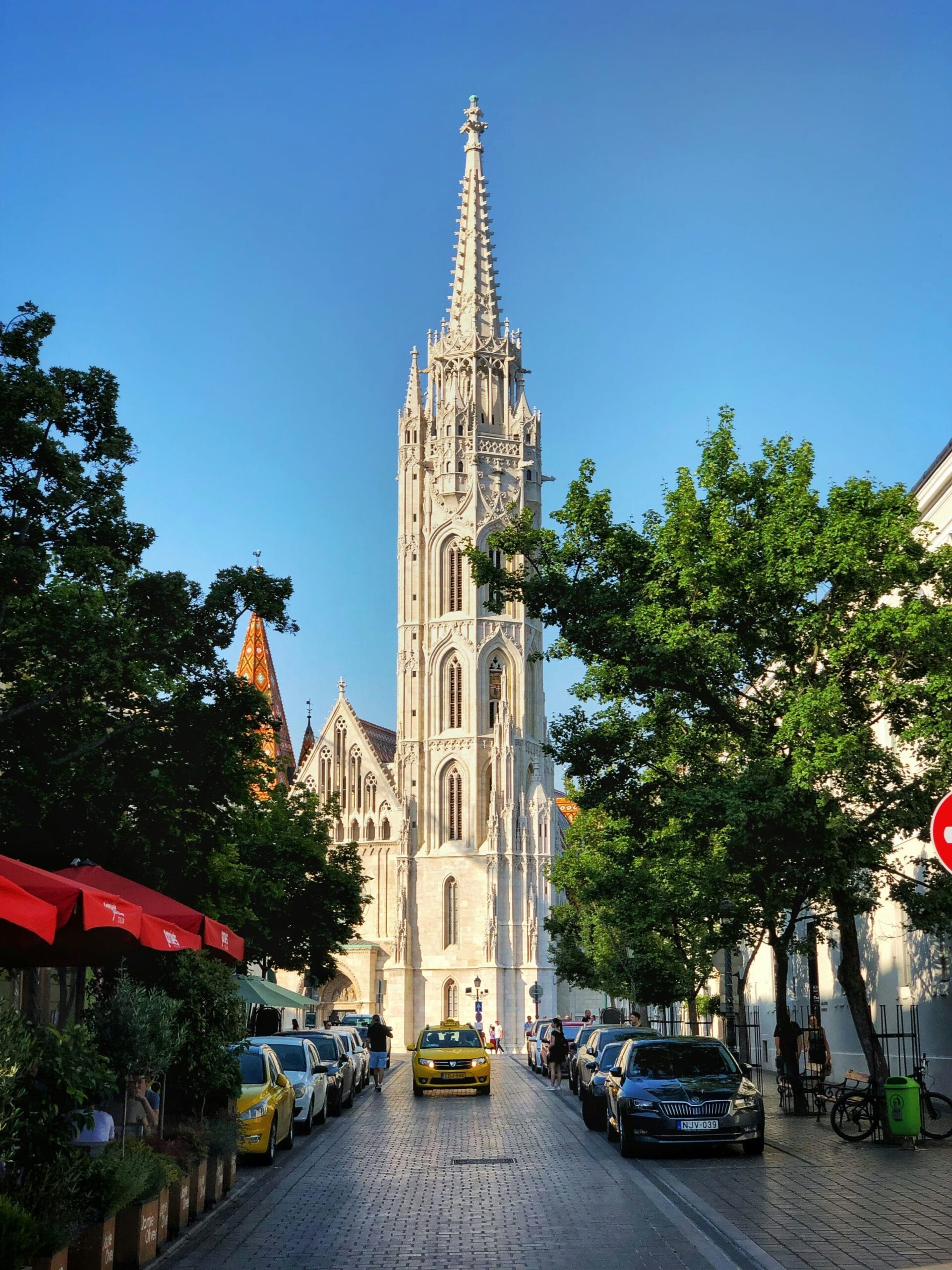
Matthias Church brings together architecture, history, and views in one place. From the outside, its patterned roof and Gothic details make it one of the most distinctive churches in Europe. Inside, the decoration is unexpected, with colorful frescoes covering walls, columns, and ceilings.
It is also one of the best places to understand the historical evolution of Budapest. From medieval kings to the Austro-Hungarian Empire, many important events are linked to this church, including the coronation of Emperor Franz Joseph and Empress Sissi.
What makes Matthias Church unique compared to other churches in Budapest?
Compared to other major churches like St. Stephen’s Basilica, Matthias Church offers a more detailed and intimate experience. While the basilica is monumental and symmetrical, Matthias Church feels more artistic and layered.
Another key difference is its history. The building has gone through multiple transformations: originally medieval, later converted into a mosque during the Ottoman period, and finally restored in a Neo-Gothic style in the 19th century. This combination of influences gives it a unique character.
What should you expect when visiting Matthias Church?
A visit to Matthias Church usually starts in Holy Trinity Square, where you can admire the exterior and take photos with the surrounding landmarks. Many travelers spend time walking around the area before deciding whether to go inside.
If you enter, you will find a richly decorated interior, several chapels, and a small museum area. A typical visit takes between 45 and 90 minutes, depending on how much you explore and whether you include the tower.
Where is Matthias Church Budapest and how do you get there?
Matthias Church is located in the heart of the Buda Castle District, on Holy Trinity Square (Szentháromság tér), one of the most scenic areas in Budapest. It sits on Castle Hill, about 70 meters above the Danube, right next to Fisherman’s Bastion.
Although many travelers associate it with Buda Castle, the church is actually a separate landmark within the same historic district. Its elevated position offers some of the best views over the river and the Pest side of the city.
Where exactly is Matthias Church located?
The church is in the northern part of Castle Hill, inside the UNESCO-listed district.
- Holy Trinity Square (Szentháromság tér), District I – Buda
From here, you are within walking distance of:
- Fisherman’s Bastion
- Buda Castle (10-15 minutes)
- Several panoramic viewpoints
This makes it easy to include in any walking route through the Buda side.
How can you get to Matthias Church by public transport?
There are several convenient ways to reach the church.
Bus 16 (most practical)
The easiest way to reach Matthias Church is by taking Bus 16 from Deák Ferenc tér in the city center. The bus crosses the Danube and stops at Halászbástya, just a short walk from the church. The journey takes around 5 to 10 minutes and is usually the most convenient option.
Buda Castle Funicular (scenic option)
If you prefer a more scenic route, you can take the Buda Castle Funicular from Clark Ádám tér, at the base of the Chain Bridge. The ride only takes a few minutes, and once at the top, it’s a pleasant short walk through the Castle District to reach the church.
Walking (flexible option)
Walking is a great choice if you want to enjoy the surroundings. From the Chain Bridge, you can walk uphill in about 15 to 20 minutes, passing several viewpoints along the way. Alternatively, starting from Széll Kálmán tér offers a similar duration but with a gentler slope.
The bus is the easiest option, while walking or taking the funicular adds more to the overall experience.
Can you walk from Pest to Buda to reach the church?
Yes, and it’s one of the best ways to approach the area.
You can cross the Széchenyi Chain Bridge and then go up to Castle Hill. This route naturally connects the flat city center of Pest with the historic Buda side.
From the base of the hill, you can continue on foot, take the funicular, or catch a bus.
Is Matthias Church inside Buda Castle or separate?
Matthias Church is not inside the Royal Palace, but it is part of the same Castle District.
- Matthias Church → religious and historical landmark
- Fisherman’s Bastion → viewpoints
- Buda Castle → former royal residence
All are within walking distance and usually visited together.
What is the history, significance, and religion of Matthias Church?
Matthias Church is one of the most important historical and religious sites in Hungary, with origins in the 13th century. It was built under King Béla IV after the Mongol invasion and became the main church of Buda.
Over time, it has been expanded, transformed, and restored, reflecting different periods of Hungarian history. Today, it remains an active Roman Catholic church and a symbol of national identity.
What is the significance of Matthias Church?
The church is known as the Coronation Church because of its role in royal ceremonies. The most important event was in 1867, when Franz Joseph and Empress Sissi were crowned here, marking the creation of the Austro-Hungarian Empire.
This event gave the church strong political and symbolic importance beyond its religious role.
Who founded Matthias Church and what is the story behind it?
The current structure dates mainly to the 13th century, when King Béla IV ordered its construction. It was originally dedicated to the Virgin Mary and known as the Church of Our Lady.
In the 15th century, King Matthias Corvinus expanded and renovated the church, adding the southern tower and reinforcing its role as a royal church. His influence is why the church now carries his name.
Why is it called the Coronation Church and where was Sissi crowned?
Matthias Church earned its title because several Hungarian kings were crowned here. The most famous ceremony took place in 1867, when Franz Joseph and Sissi were crowned.
This moment was crucial for Hungary’s political history and helped define the church’s long-term importance.
Why is it also known as the Church of Our Lady?
Before being associated with King Matthias, the church was dedicated to the Virgin Mary and known as the Church of Our Lady.
This reflects a long-standing Hungarian tradition, where the country was symbolically placed under Mary’s protection.
What religion is Matthias Church and what is practiced today?
Matthias Church is a Roman Catholic church and still functions as an active place of worship. It belongs to the Archdiocese of Esztergom-Budapest and regularly hosts masses and religious events.
At the same time, it is open to visitors as a historical and cultural site, balancing both roles.
Who was Saint Matthias and why is the church named after him?
The name can be confusing. The church is mainly named after King Matthias Corvinus, not directly after the biblical Saint Matthias.
Saint Matthias was one of the apostles, chosen to replace Judas. While the name overlaps, in Budapest the reference is primarily linked to the Hungarian king.
What are the most interesting facts, architecture, and burials in Matthias Church?
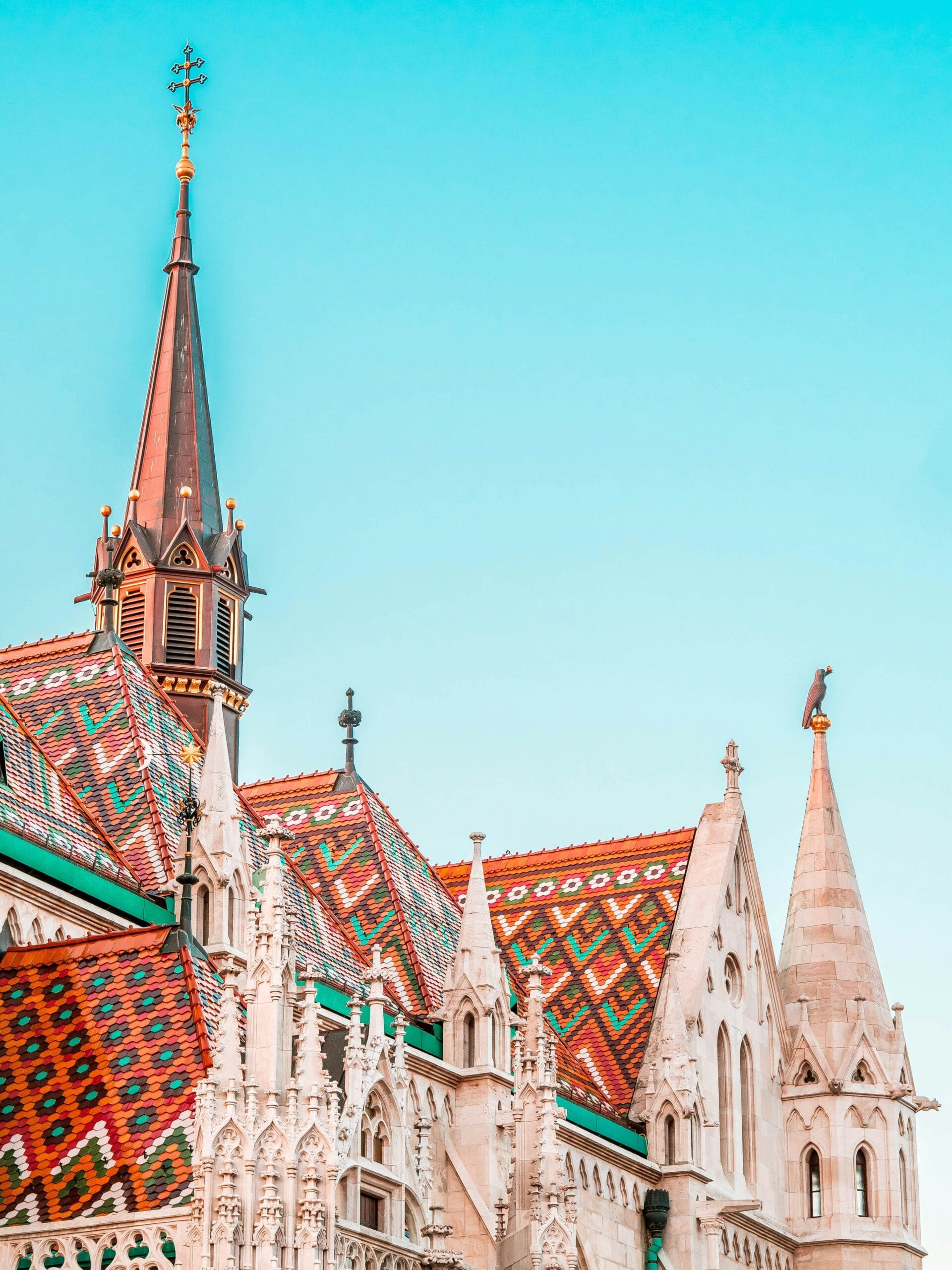
Matthias Church is one of those places where the details matter as much as the overall structure. At first glance, it looks like a classic Gothic church, but the more you observe it, the more you realize how different it is from others in Europe.
The building you see today is the result of centuries of transformation. While its origins are medieval, much of its current appearance comes from a 19th-century restoration led by architect Frigyes Schulek. Instead of simply rebuilding what was lost, he combined historical research with creative interpretation, giving the church a distinctive look that blends past and present.
Why does Matthias Church have one black spire?
One of the small details that often raises questions is the presence of a darker spire on the roof, commonly referred to as the “black spire.” This element, known as the Hussar Tower, is quite different from the main towers of the church.
Its darker tone comes from the materials used, which have aged differently over time. But beyond the color, its shape and position are also symbolic. The structure was designed to sit along the ridge of the roof in a way that resembles a rider on horseback, a subtle reference to the Hungarian hussars, a historic cavalry unit that holds a strong place in national identity.
It’s a good example of how even the smallest architectural elements in the church carry meaning beyond simple decoration.
How old is Matthias Church?
The roots of Matthias Church go back to the 13th century, when King Béla IV ordered its construction after the Mongol invasion reshaped the region. However, the building has never remained unchanged for long.
Over the centuries, it has been expanded, damaged, repurposed, and restored. During the Ottoman occupation, it was converted into a mosque, which led to the removal or covering of many Christian elements. Later, in the 19th century, a major restoration reshaped the church again, giving it the Neo-Gothic style you see today.
So while the church is undeniably medieval in origin, its current form reflects a long process of adaptation rather than a single moment in time.
What makes the architecture and interior unique?
The first thing most people notice is the colorful roof, covered in ceramic tiles arranged in geometric patterns. These tiles, produced by the Zsolnay factory, were added during the 19th-century restoration and have become one of the most recognizable features of the Budapest skyline.
But the real surprise comes when you step inside.
Unlike many Gothic churches that feel austere or minimal, the interior of Matthias Church is rich and decorative. The walls, columns, and ceilings are covered with:
- intricate frescoes
- repeating geometric motifs
- warm tones like red, gold, and brown
This creates a very different atmosphere, more intimate and visually dense. Instead of large empty spaces, every surface contributes to the overall experience, almost like walking through a living piece of art.
This contrast between a Gothic structure and a highly decorated interior is one of the reasons why the church feels so unique.
Are there royal tombs inside Matthias Church?
Yes, and they are among the most historically significant elements of the interior.
The church houses the tomb of King Béla III and his wife Anne of Châtillon, whose remains were discovered in the 19th century and later transferred here. Their sarcophagus is located inside the church and represents one of the few surviving medieval royal tombs in Hungary.
What makes this particularly important is that many royal burial sites were lost or destroyed over time. As a result, this tomb offers a rare and tangible connection to Hungary’s medieval past.
Do you need tickets for Matthias Church Budapest and how much does it cost?
If you’re planning to go inside Matthias Church, you will need to buy a ticket. While the exterior and the surrounding square are free to explore, access to the interior, including the museum areas, is paid.
This is quite common in Budapest, where many historic churches combine their religious function with a managed visitor experience.
Is Matthias Church free to enter?
In most cases, entry to the interior requires a ticket.
However, there is one exception: you can enter for free during religious services. This allows you to experience the church as a place of worship, but it comes with some limitations:
- you must remain seated
- you cannot walk around
- photography is not allowed
So while it’s technically possible to enter for free, it’s not the same as a full visit.
How much does Matthias Church Budapest cost?
Ticket prices are relatively stable and follow a clear structure.
| Ticket Type | Price (HUF) | Notes |
|---|---|---|
| Adult | 3,400 – 4,000 | Includes interior + museum |
| Student / Senior | 2,700 – 3,300 | Valid ID required |
| Family | ~9,500 | 2 adults + children |
| Tower access | 3,300 – 4,000 | Separate ticket |
| Children under 6 | Free | With proof of age |
Prices may vary slightly depending on the season or exchange rate, but this gives a reliable estimate.
Do you need to book tickets in advance?
Booking in advance is not strictly required, but it can be useful, especially during busy periods like weekends or peak tourist season.
You can either:
- buy tickets directly at the entrance
- or book online through the official website.
Advance booking becomes more important if you plan to climb the tower, as access is limited to a set number of visitors per time slot.
Is it worth paying to go inside Matthias Church?
For most visitors, the answer is yes.
From the outside, Matthias Church is already impressive, but the interior adds a completely different dimension. The level of detail, the decoration, and the historical elements make the visit much more meaningful.
If you are only interested in views and photos, staying outside may be enough. But if you want to understand the place beyond its appearance, going inside is what completes the experience.
What are the opening hours of Matthias Church Budapest and when is the best time to visit?
Matthias Church is open to visitors most days of the week, but since it is still an active place of worship, opening hours can vary depending on religious services and events. This is one of the most important things to keep in mind when planning your visit.
In general, weekday hours are more consistent, while weekends, especially Saturdays and Sundays, can be more limited due to weddings and masses.
What are the opening hours of Matthias Church?
A typical weekly schedule looks like this:
| Day | Opening Hours | Notes |
|---|---|---|
| Monday-Friday | 09:00 – 17:00 / 18:00 | Most stable visiting hours |
| Saturday | 09:00 – 12:00 / 13:00 | Often closes early for events |
| Sunday | 13:00 – 17:00 | Opens after morning mass |
Because the church prioritizes its religious function, these hours can change. For this reason, it’s always a good idea to check the official website before your visit.
When is the best time to visit Matthias Church?
Timing can make a big difference in your experience.
If you want a quieter visit, early morning right after opening is usually the best choice. Late afternoon, after around 15:30, is another good option, as most tour groups have already left. Midweek days, especially Tuesday and Wednesday, tend to be less crowded than weekends.
For photography, the late afternoon light is ideal. The colors of the roof and the details of the façade become more visible, and the surrounding area is less busy, which makes it easier to enjoy the setting.
Can opening hours change during holidays or events?
Yes, and quite often.
Matthias Church regularly hosts weddings, concerts, and religious celebrations. During these times, access for visitors may be limited or temporarily closed. Saturdays are particularly affected because of weddings, while Sundays follow a different schedule due to mass.
This is why checking the schedule in advance is always recommended if you have a tight itinerary.
How long should you plan for your visit?
The amount of time you need depends on how much you want to explore.
| Type of Visit | Time Needed |
|---|---|
| Exterior only | 15–30 minutes |
| Interior visit | 45–60 minutes |
| Full visit + tower | 60–90 minutes |
Since the church is located in the Castle District, many visitors combine it with nearby attractions, so it’s worth planning at least one to two hours for the entire area.
What should you know before visiting Matthias Church Budapest?
Before visiting Matthias Church, it’s worth knowing a few practical details that can significantly improve your experience. Unlike many tourist attractions, this is still an active religious site, so access, timing, and behavior follow different rules.
A bit of preparation helps you avoid small issues and makes the visit smoother, especially during busy periods.
Is there a dress code for Matthias Church?
Yes, and it is strictly applied.
As a Roman Catholic church, visitors are expected to dress respectfully. This means:
- shoulders must be covered
- knees should be covered
- sleeveless tops and very short clothing are not allowed
- hats should be removed inside
If you don’t meet these requirements, you may be denied entry even if you already have a ticket. Bringing a light scarf or wearing appropriate clothing is the easiest way to avoid problems.
Do you need to follow any rules inside the church?
Yes, and they are mainly about maintaining a respectful atmosphere.
Inside the church:
- photography is allowed, but without flash
- talking should be kept quiet
- phone use should be limited
- food and drinks are not allowed
The space is still used for religious purposes, so behavior is expected to reflect that.
Can you visit Matthias Church during a mass?
Yes, and it offers a different type of experience.
During a mass:
- entry is free
- movement is restricted
- photography is not allowed
This is a good option if you want to experience the church as a place of worship rather than as a tourist attraction. However, it does not replace a full visit, as you won’t be able to explore the interior.
What should you not miss during your visit?
To get the most out of your visit, it’s worth paying attention to a few key elements.
From the outside, take time to observe the roof and the structure of the church from different angles, especially from the area near Fisherman’s Bastion.
Inside, focus on:
- the painted walls and frescoes
- the smaller chapels
- the overall decoration, which is easy to overlook if you rush
If you have extra time, the tower climb offers one of the best viewpoints in the area.
What are common mistakes to avoid?
A few small mistakes can affect your experience:
- arriving without checking updated opening hours
- visiting during peak times and finding it too crowded
- not respecting the dress code
- assuming the visit works like a museum
Also, like in most tourist areas, it’s a good idea to stay aware of your belongings, especially in crowded spots around the Castle District.
Practical tips before you go
To keep things simple:
- check the schedule before your visit
- go early or late in the day if possible
- bring something to cover shoulders if needed
- plan at least 1 hour if you want to go inside
- combine the visit with nearby attractions